Ganesha (c. 1890): Art, History and Details
Ganesha at the Cleveland Museum of Art: c. 1890, Gum tempera, graphite, and ink on paper. Explore the work's context, creator attribution and collection history.
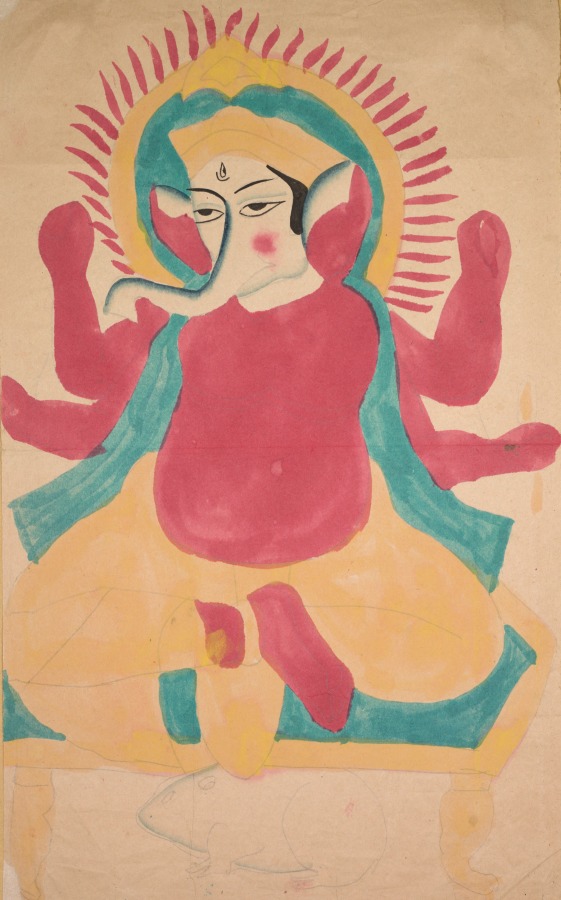
Ganesha (c. 1890) is in the Cleveland Museum of Art collection.
The work and its context
The museum's open-access catalogue describes the work:
Ganesh, seated here in these two images on his vehicle, the mouse, is the ever-popular elephant-headed deity who is worshipped as the mischievous Lord of Beginnings and Remover of Obstacles. Hindus worship him before they begin journeys, at the start of the day, and at the beginning of any auspicious occasion. Ganesh is the son of Shiva and Parvati, Shiva’s wife, and is fashioned from the dirt of her body. At his mother’s request, Ganesh guarded her as she bathed, only to be confronted by Shiva, Parvati’s husband, who was refused entry. Enraged (and not knowing that Ganesh was his son), Shiva beheaded him and entered. Parvati demanded that Ganesh be restored. To appease his wife, Shiva sent his attendants to return with the head of the first creature they encountered. They returned with the head of an elephant. The image on the wall is unfinished, revealing the technique of painting in stages employed by Kalighat artisans.
Object facts
- Title: Ganesha
- Date: c. 1890
- Culture: Eastern India, Bengal, Kolkata, Kalighat
- Type: Painting
- Technique: Gum tempera, graphite, and ink on paper
- Dimensions: Painting only: 45.3 x 27.5 cm (17 13/16 x 10 13/16 in.)
- Collection: Indian Art
- Department: Indian and Southeast Asian Art
- Accession number: 2003.166
A detail from the museum
An outline of Ganesh's vehicle, the rat, is under his seat.
Collection credit
Gift of William E. Ward in memory of his wife, Evelyn Svec Ward
View the collection record
See the museum's photographs and full catalogue entry. Catalogue text is reproduced from the Cleveland Museum of Art's open-access data, with HTML formatting removed. This object and its supplied image are designated CC0.
Sources
More in Lifestyle
Keep reading