Goddess Uma (1000s): Art, History and Details
Goddess Uma at the Cleveland Museum of Art: 1000s, gilt bronze and semiprecious stones. Explore the work's context, creator attribution and collection history.
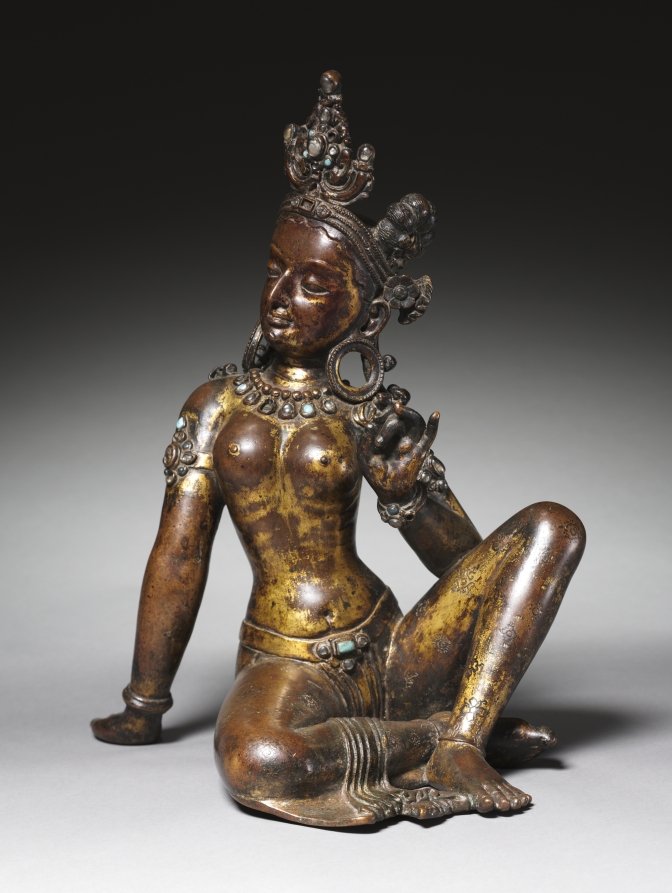
Goddess Uma (1000s) is in the Cleveland Museum of Art collection.
The work and its context
The museum's open-access catalogue describes the work:
Uma is a mother goddess, and she is depicted here as turning toward her consort, the Hindu god Shiva, a companion sculpture from which this image of Uma has been separated. The grace and femininity of this solid-cast figure are balanced by her confident gesture and expression. She embodies the creative energy of god and the beauty of his creation. In Nepal, Hinduism and Buddhism have continued to flourish simultaneously, in contrast to Tibet, which is predominantly Buddhist, and India, where Buddhism was no longer practiced after the 14th century.
Object facts
- Title: Goddess Uma
- Date: 1000s
- Culture: Nepal
- Type: Sculpture
- Technique: gilt bronze and semiprecious stones
- Dimensions: Overall: 35.6 x 27.9 x 25.4 cm (14 x 11 x 10 in.)
- Collection: Nepalese Art
- Department: Indian and Southeast Asian Art
- Accession number: 1982.49
Collection credit
Leonard C. Hanna Jr. Fund
Further reading listed by the museum
- Lee, Sherman E. "Year in Review for 1982." The Bulletin of the Cleveland Museum of Art 70, no. 1 (1983): 3-55.
- Pal, Pratapaditya, Amy Heller, Oskar von Hinüber, and Gautamavajra Vajrācārya. Himalayas: An Aesthetic Adventure. Chicago, Ill: Art Institute of Chicago in association with University of California Press and Mapin Pub, 2003.
- Ekserdjian, David. Bronze. London: Royal Academy of Arts, 2012.
View the collection record
See the museum's photographs and full catalogue entry. Catalogue text is reproduced from the Cleveland Museum of Art's open-access data, with HTML formatting removed. This object and its supplied image are designated CC0.
Sources
More in Lifestyle
Keep reading