Gorges Du Tarn Castelbouc (1870s): Art, History and Details
Gorges Du Tarn Castelbouc at the Cleveland Museum of Art: 1870s, salted paper print from wet collodion negative. Explore the work's context, creator attribution and collection history.
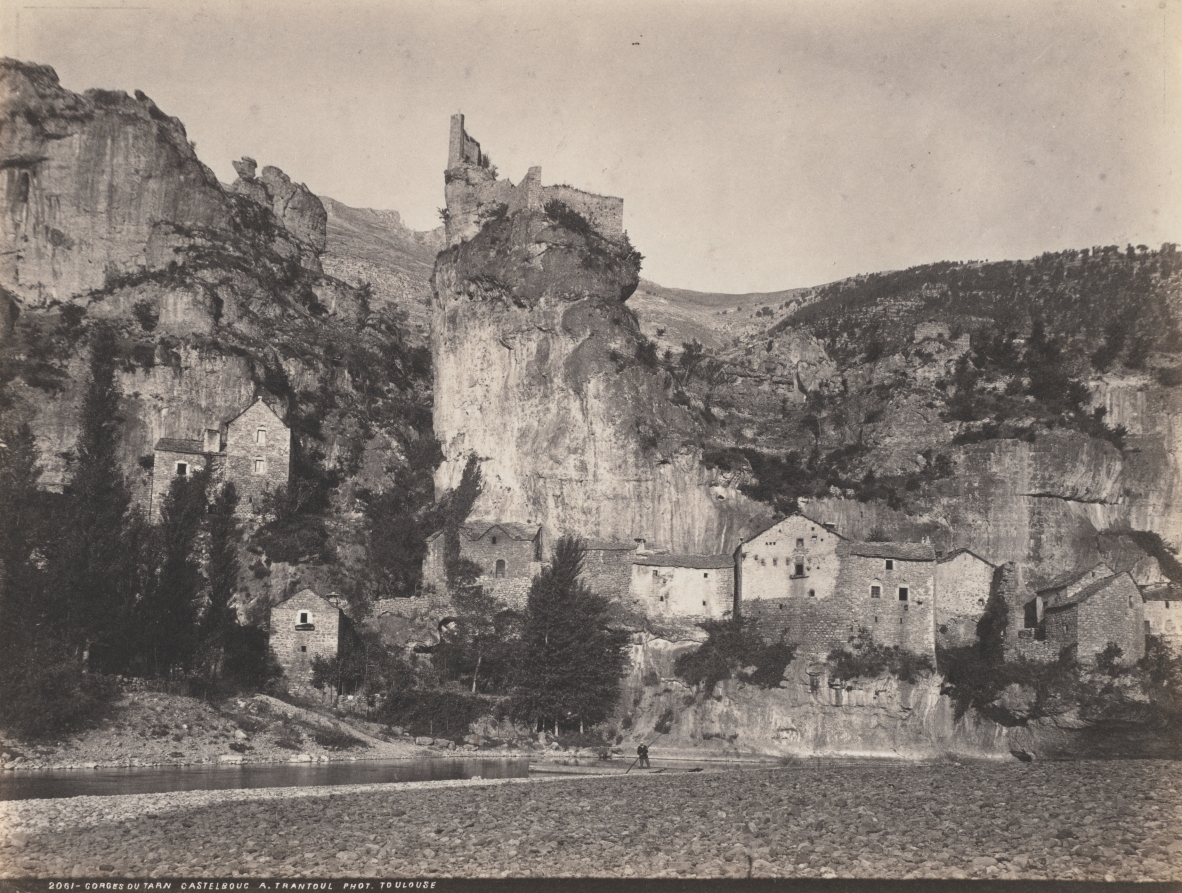
Gorges Du Tarn Castelbouc (1870s) is in the Cleveland Museum of Art collection. The museum's creator attribution is Amédée Trantoul (French, 1837–1910).
The work and its context
The museum's open-access catalogue describes the work:
The Gorges du Tarn is a canyon formed by the Tarn River in southern France. At the foot of some of its cliffs, below a ruined medieval castle, lies the ancient village of Castelbouc. It contains semitroglodyte dwellings, buildings that were built into the hillsides. Amédée Trantoul learned photography from his father, who had a studio in Toulouse which his son ran after his death.
Object facts
- Title: Gorges Du Tarn Castelbouc
- Date: 1870s
- Creator attribution: Amédée Trantoul (French, 1837–1910)
- Culture: France, 19th century
- Type: Photograph
- Technique: salted paper print from wet collodion negative
- Dimensions: Image: 18.8 x 25.4 cm (7 3/8 x 10 in.); Paper: 19.3 x 25.4 cm (7 5/8 x 10 in.); Matted: 35.6 x 45.7 cm (14 x 18 in.)
- Collection: PH - French 19th Century
- Department: Photography
- Accession number: 1998.154
Collection credit
John L. Severance Fund
View the collection record
See the museum's photographs and full catalogue entry. Catalogue text is reproduced from the Cleveland Museum of Art's open-access data, with HTML formatting removed. This object and its supplied image are designated CC0.
Sources
More in Lifestyle
Keep reading