Ladies at Toilette (c. 50–200 CE): Art, History and Details
Ladies at Toilette at the Cleveland Museum of Art: c. 50–200 CE, ivory. Explore the work's context, creator attribution and collection history.
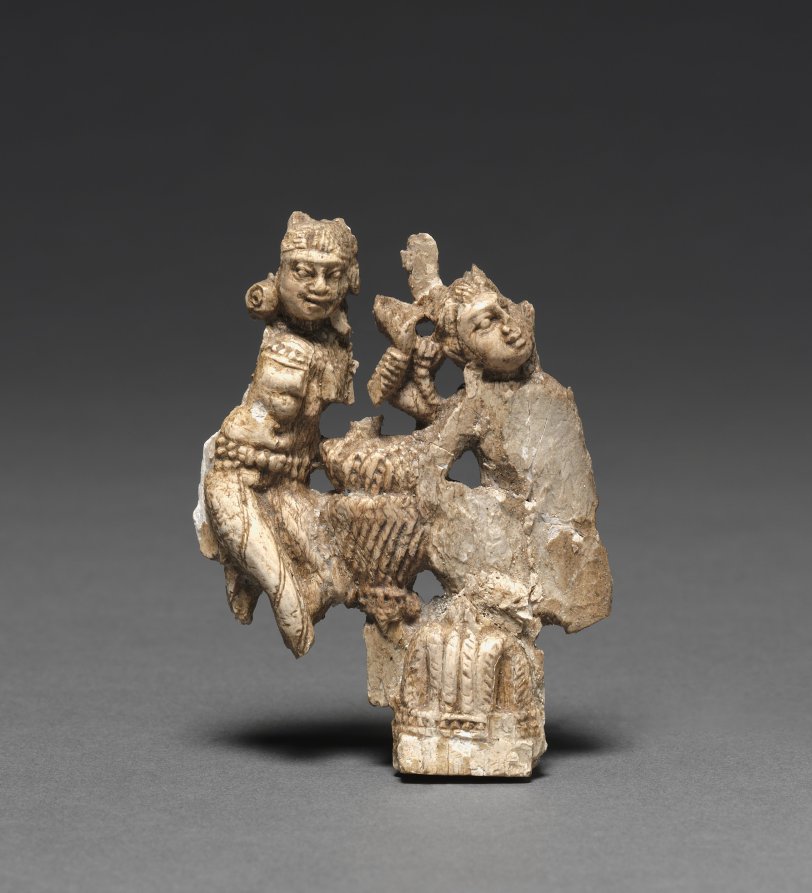
Ladies at Toilette (c. 50–200 CE) is in the Cleveland Museum of Art collection.
The work and its context
The museum's open-access catalogue describes the work:
This ivory carving was made to sheath wooden furniture made in India for trade along the Silk Road, which stretched from Rome to China. One lady adjusts the coiffure of another; a wicker stool is between them. Indian ivory-faced furnishings—along with lacquer boxes from China and painted glass from Rome—were found in an extraordinary deposit of luxury goods at a site called Begram.
Object facts
- Title: Ladies at Toilette
- Date: c. 50–200 CE
- Culture: Afghanistan, Begram, Kushan period
- Type: Ivory
- Technique: ivory
- Dimensions: Overall: 7.2 x 5.3 cm (2 13/16 x 2 1/16 in.)
- Collection: Indian Art - Kushan
- Department: Indian and Southeast Asian Art
- Accession number: 1985.104
Collection credit
Leonard C. Hanna Jr. Fund
Further reading listed by the museum
- Czuma, Stanislaw J., and Rekha Morris. Kushan Sculpture: Images from Early India. Cleveland, OH: The Cleveland Museum of Art in cooperation with Indiana University Press, 1985.
- Turner, Evan H. "The Year in Review for 1985." The Bulletin of the Cleveland Museum of Art 73, no. 2 (1986): 26-71.
View the collection record
See the museum's photographs and full catalogue entry. Catalogue text is reproduced from the Cleveland Museum of Art's open-access data, with HTML formatting removed. This object and its supplied image are designated CC0.
Sources
More in Lifestyle
Keep reading