Guardian Animal: Komainu (1300s): Art, History and Details
Guardian Animal: Komainu at the Cleveland Museum of Art: 1300s, Wood with traces of color. Explore the work's context, creator attribution and collection history.
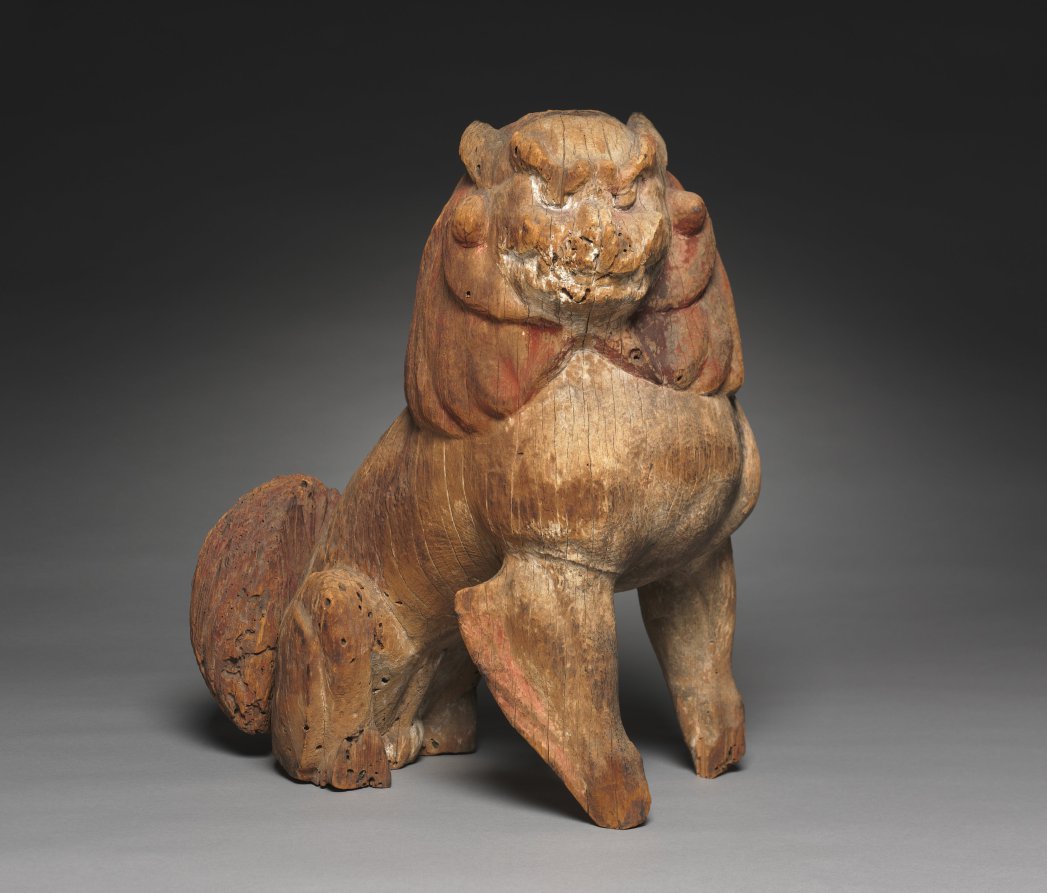
Guardian Animal: Komainu (1300s) is in the Cleveland Museum of Art collection.
The work and its context
The museum's open-access catalogue describes the work:
Placed at the entrance to shrines and temples in Japan, guardian figures ward off evil spirits. These guardians used to be painted red and white and are distinguishable by their facial expressions: the open-mouthed animal is a karashishi, or “Chinese lion,” while the close-mouthed beast, which once had a single horn protruding from its head, is called a komainu, or “Korean dog.” The mouths correspond to infinity, the syllables ah (open) and um (closed), or the alpha and omega. This pairing was widespread in ancient times in Chinese territories and likely found its way to Japan via kingdoms in Korea.
Object facts
- Title: Guardian Animal: Komainu
- Date: 1300s
- Culture: Japan, Kamakura period (1185–1333)
- Type: Sculpture
- Technique: Wood with traces of color
- Dimensions: Overall: 49.6 cm (19 1/2 in.)
- Collection: Japanese Art
- Department: Japanese Art
- Accession number: 1924.351.1
Collection credit
Dudley P. Allen Fund
Further reading listed by the museum
- Sizer, Theodore. “A Note on the Japanese Collection.” The Bulletin of the Cleveland Museum of Art, vol. 11, no. 9, 1924, pp. 174–175 and 187.
- The Cleveland Museum of Art. Handbook of the Cleveland Museum of Art/1966. Cleveland, OH: The Cleveland Museum of Art, 1966.
- Mayuyama, Junkichi. Japanese Art in the West. [Tokyo]: Mayuyama & Co, 1966.
View the collection record
See the museum's photographs and full catalogue entry. Catalogue text is reproduced from the Cleveland Museum of Art's open-access data, with HTML formatting removed. This object and its supplied image are designated CC0.
Sources
More in Lifestyle
Keep reading