Guardian Griffin (1150–1175): Art, History and Details
Guardian Griffin at the Cleveland Museum of Art: 1150–1175, pink limestone (called "Verona Marble"). Explore the work's context, creator attribution and collection history.
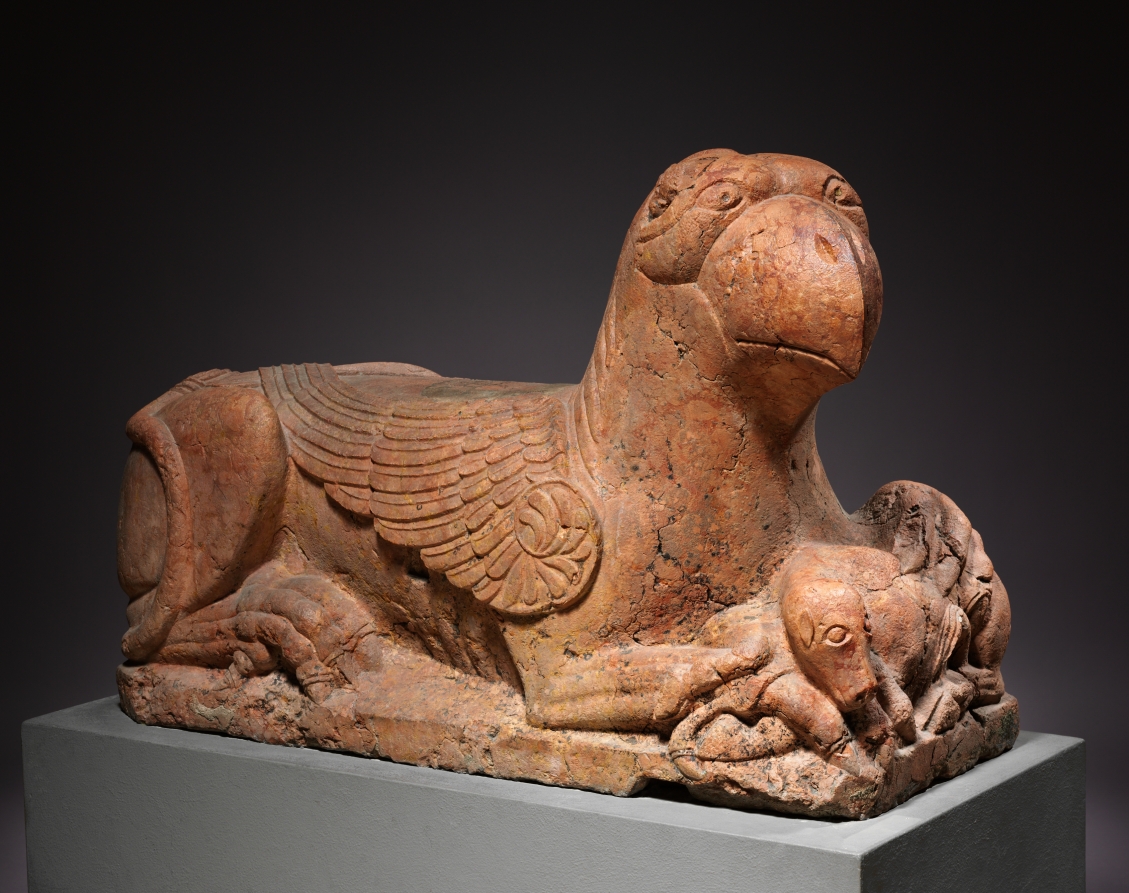
Guardian Griffin (1150–1175) is in the Cleveland Museum of Art collection.
The work and its context
The museum's open-access catalogue describes the work:
Griffins are fabled creatures that have the characteristics of an eagle and a lion--combining watchfulness and courage. In Christian art, the dual nature of the griffin was often used to signify that of Christ himself: divine (bird) and human (animal). Griffins were often used as guardian figures in church sculpture and were placed in portals and choir screens. The creatures seen here, with their inward-turning heads, were certainly used for such a purpose. When viewed from the front, one griffin may be seen protecting the figure of a knight between its paws, while the other griffin guards a calf. Their original function was probably to support the columns of a porch in front of a church doorway.
Object facts
- Title: Guardian Griffin
- Date: 1150–1175
- Culture: Northern Italy, Emilia, 12th century
- Type: Sculpture
- Technique: pink limestone (called "Verona Marble")
- Dimensions: Overall: 76.7 x 47.3 x 119.9 cm (30 3/16 x 18 5/8 x 47 3/16 in.)
- Collection: MED - Romanesque
- Department: Medieval Art
- Accession number: 1928.861.2
Collection credit
Purchase from the J. H. Wade Fund
Further reading listed by the museum
- McClanan, Anne L. Griffinology: The Griffin’s Place in Myth, History and Art. London, UK: Reaktion Books Ltd, 2024.
View the collection record
See the museum's photographs and full catalogue entry. Catalogue text is reproduced from the Cleveland Museum of Art's open-access data, with HTML formatting removed. This object and its supplied image are designated CC0.
Sources
More in Lifestyle
Keep reading