Hauberk (c. 1400–1450): Art, History and Details
Hauberk at the Cleveland Museum of Art: c. 1400–1450, steel and brass rings, riveted with modern buckles and straps. Explore the work's context, creator attribution and collection history.
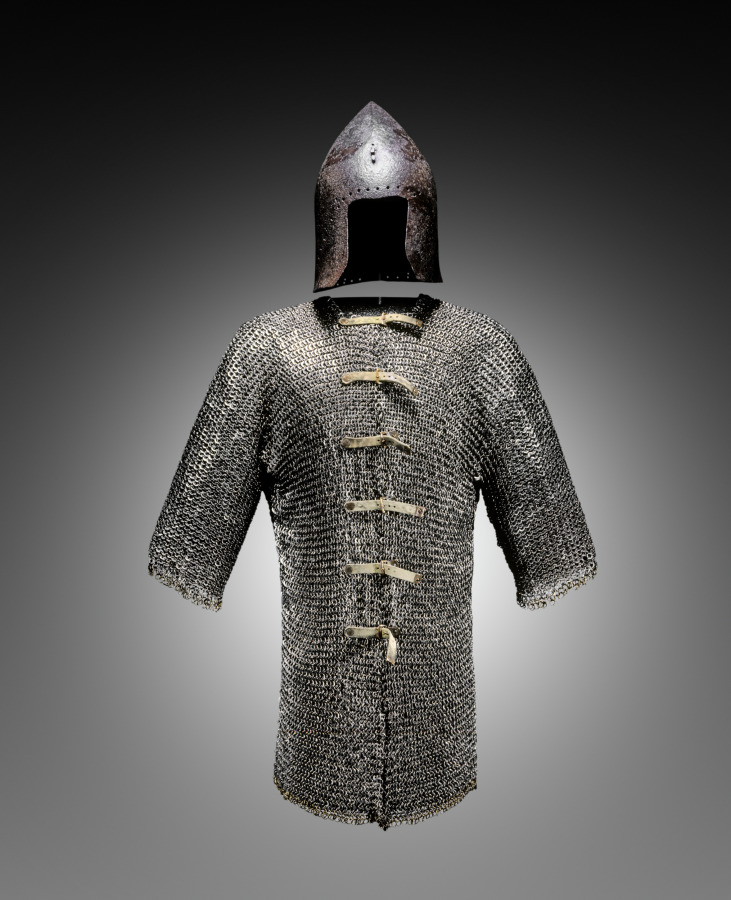
Hauberk (c. 1400–1450) is in the Cleveland Museum of Art collection.
The work and its context
The museum's open-access catalogue describes the work:
Mail armor was the predominant form of metal body defense for European knights until about 1350. The term derives from the Old French word maille (mesh), implying a protective textile. Each mail garment was constructed of small linked metal rings and "woven" for a specific part of the body. Mail for the torso is a hauberk and typically reached mid-thigh.
Object facts
- Title: Hauberk
- Date: c. 1400–1450
- Culture: Germany (?)
- Type: Arms and Armor
- Technique: steel and brass rings, riveted with modern buckles and straps
- Dimensions: Overall: 76.2 cm (30 in.); Sleeves: 43.2 cm (17 in.)
- Collection: MED - Arms & Armor
- Department: Medieval Art
- Accession number: 1923.1120
A detail from the museum
Mail was expensive to make and generally only available to warriors of noble birth unless it could be obtained as war booty.
Collection credit
Gift of John L. Severance
Further reading listed by the museum
- American Art Association. Illustrated Catalogue of Ancient Arms and Armor, Stained Glass, Coffrets and Furniture, Authentic Specimens, in Nearly All Instances European. New York: American Art Association, 1923.
- Gibson, Katharine. The Goldsmith of Florence; A Book of Great Craftsmen. New York: The Macmillan Company, 1929.
- Gilchrist, Helen Ives. Handbook of the Severance Collection of Arms and Armor. Cleveland, Ohio: The Cleveland Museum of Art, 1948.
View the collection record
See the museum's photographs and full catalogue entry. Catalogue text is reproduced from the Cleveland Museum of Art's open-access data, with HTML formatting removed. This object and its supplied image are designated CC0.
Sources
More in Lifestyle
Keep reading