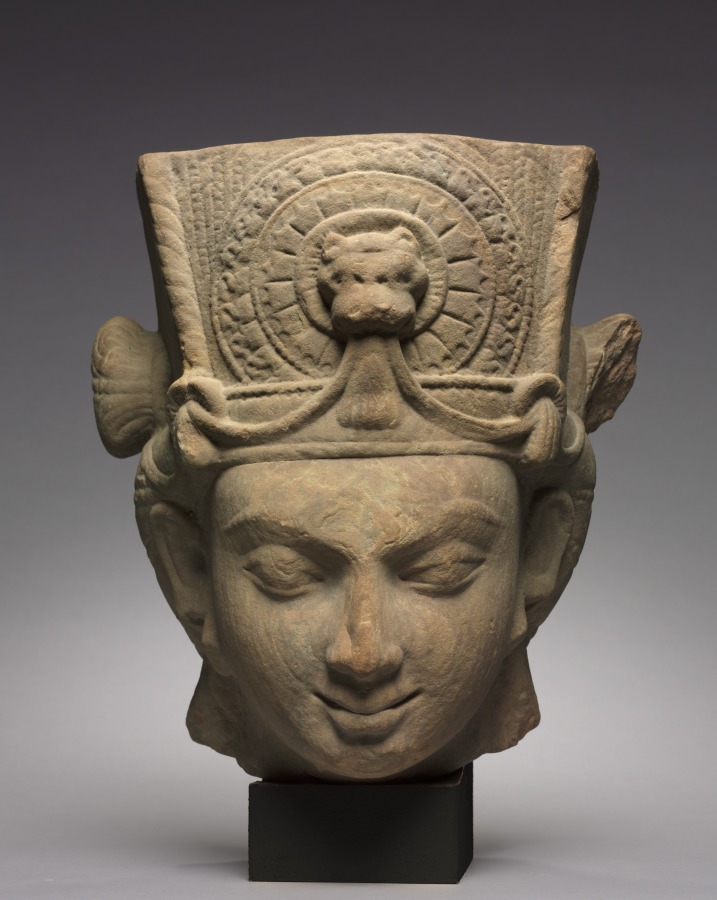
Head of Male Deity, possibly Aiyanar (600–650): Art, History and Details
Head of Male Deity, possibly Aiyanar at the Cleveland Museum of Art: 600–650, sandstone. Explore the work's context, creator attribution and collection history.
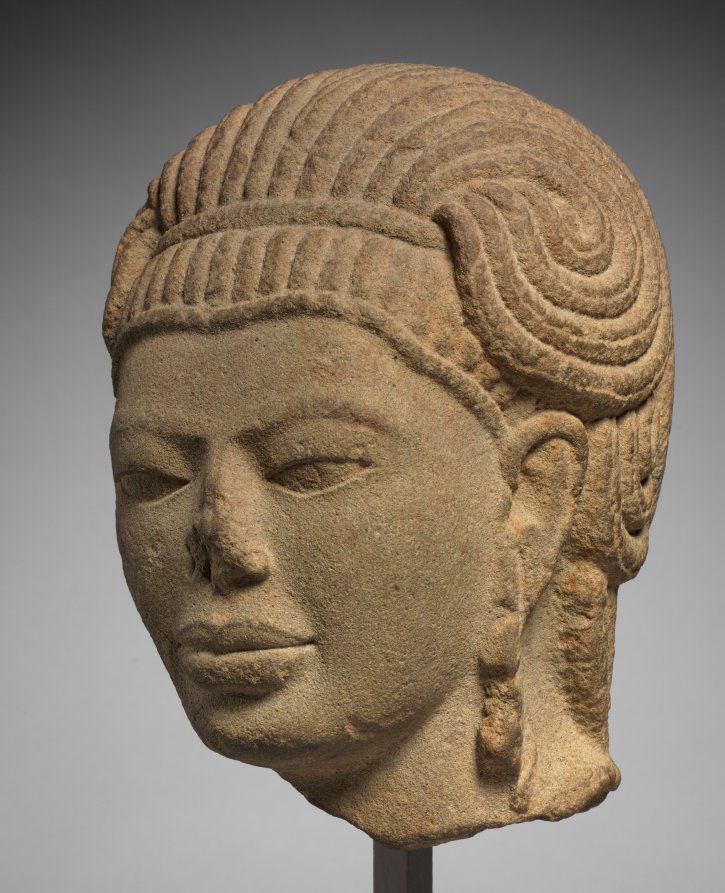
Head of Male Deity, possibly Aiyanar (600–650) is in the Cleveland Museum of Art collection.
The work and its context
The museum's open-access catalogue describes the work:
The dreadlocks suggest that this figure is related to the Hindu god Shiva, and the sensitive rendering of the facial features indicates that it was carved during the early phase of stone sculpture production in Thailand. A more complete sculpture of another male figure with dreadlocks and youthful features is known from Thailand and shows him seated with one knee up, supported by a yoga strap. In South India, a deity of this description is worshiped as a guardian on the outskirts of villages on the banks of ponds and reservoirs, known as Aiyanar, which means "Lord" in the Tamil language. Alternatively, this figure could be an ascetic, or follower of Shiva.
Object facts
- Title: Head of Male Deity, possibly Aiyanar
- Date: 600–650
- Culture: Central Thailand, Phetchabun province, possibly Si Thep
- Type: Sculpture
- Technique: sandstone
- Dimensions: Overall: 26.1 cm (10 1/4 in.)
- Collection: Southeast Asian
- Department: Indian and Southeast Asian Art
- Accession number: 1970.11
A detail from the museum
This figure may depict a deity who protects travelers on their way.
Collection credit
John L. Severance Fund
Further reading listed by the museum
- "New Oriental art galleries at Cleveland." Apollo: A Journal of the Arts. August 1970, Vol. 92, pp. 148-151.
- Lee, Sherman E. “The Year in Review for 1970.” The Bulletin of the Cleveland Museum of Art, vol. 58, no. 2, 1971, pp. 22–71.
- The Cleveland Museum of Art. Handbook of the Cleveland Museum of Art/1978. Cleveland, OH: The Cleveland Museum of Art, 1978.
View the collection record
See the museum's photographs and full catalogue entry. Catalogue text is reproduced from the Cleveland Museum of Art's open-access data, with HTML formatting removed. This object and its supplied image are designated CC0.
Sources
More in Lifestyle
Keep reading