Headdress Ornament (c. 300 BCE–200 CE): Art, History and Details
Headdress Ornament at the Cleveland Museum of Art: c. 300 BCE–200 CE, hammered and embossed gold-copper alloy. Explore the work's context, creator attribution and collection history.
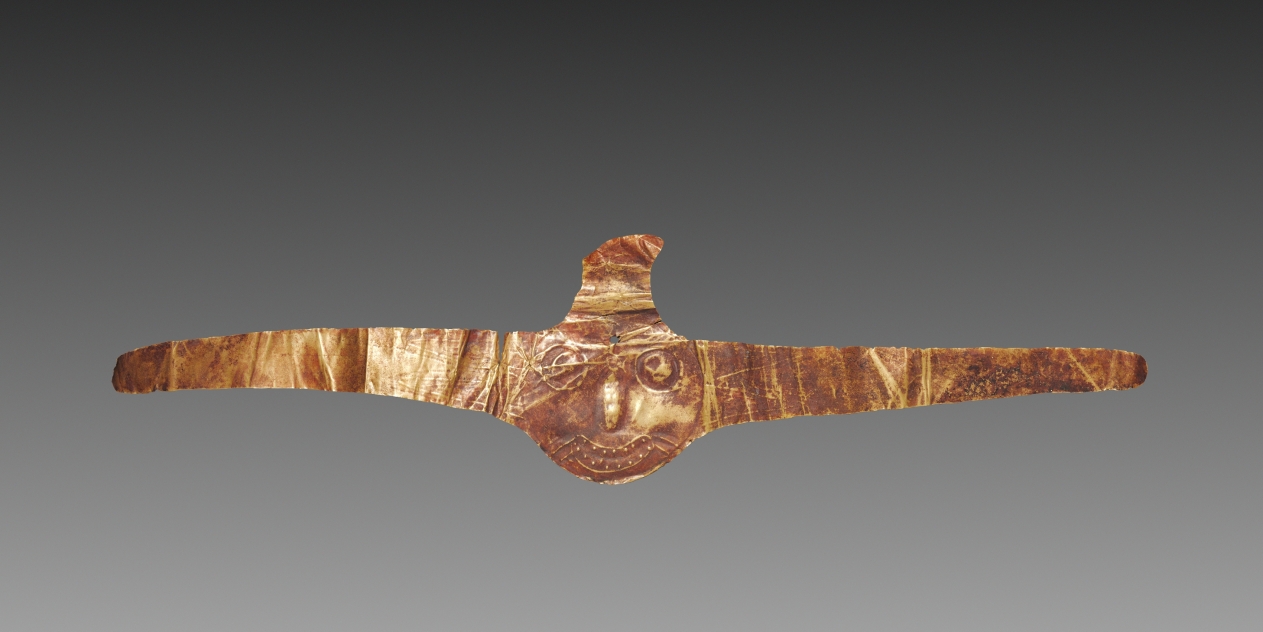
Headdress Ornament (c. 300 BCE–200 CE) is in the Cleveland Museum of Art collection.
The work and its context
The museum's open-access catalogue describes the work:
Gold ornaments have been discovered among the innermost wrappings of Paracas mummy-bundles, and were probably personal possessions of the deceased. The embossed image in the center of each ornament is a deity face, characterized by protruding eyes and a grinning, toothy mouth. Snakelike appendages emanate from the face. Figures embroidered on Paracas garments are frequently depicted with similarly shaped ornaments, either worn above the forehead or brandished in one hand.
Object facts
- Title: Headdress Ornament
- Date: c. 300 BCE–200 CE
- Culture: Peru, South Coast, Paracas
- Type: Jewelry
- Technique: hammered and embossed gold-copper alloy
- Dimensions: Overall: 6.8 cm (2 11/16 in.)
- Collection: AA - Andes
- Department: Art of the Americas
- Accession number: 1938.432
Collection credit
Dudley P. Allen Fund
View the collection record
See the museum's photographs and full catalogue entry. Catalogue text is reproduced from the Cleveland Museum of Art's open-access data, with HTML formatting removed. This object and its supplied image are designated CC0.
Sources
More in Lifestyle
Keep reading