Headrest of Irut (c. 2454–2140 BCE): Art, History and Details
Headrest of Irut at the Cleveland Museum of Art: c. 2454–2140 BCE, travertine. Explore the work's context, creator attribution and collection history.
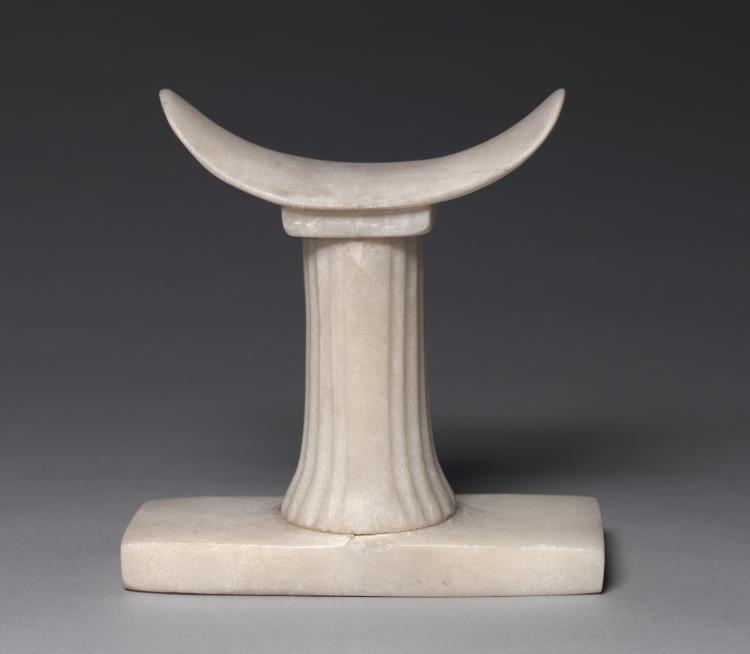
Headrest of Irut (c. 2454–2140 BCE) is in the Cleveland Museum of Art collection.
The work and its context
The museum's open-access catalogue describes the work:
The ancient Egyptians used wooden headrests as pillows. Stone headrests were replicas made for the tomb. This example is inscribed on the top of the supporting column for "the king’s noblewoman, Irut."
Object facts
- Title: Headrest of Irut
- Date: c. 2454–2140 BCE
- Culture: Egypt, Old Kingdom (2647–2124 BCE), Dynasties 5–6
- Type: Funerary Equipment
- Technique: travertine
- Dimensions: Overall: 19.5 x 18.8 x 7.4 cm (7 11/16 x 7 3/8 x 2 15/16 in.)
- Collection: Egypt - Old Kingdom
- Department: Egyptian and Ancient Near Eastern Art
- Accession number: 1914.626
Collection credit
Gift of the John Huntington Art and Polytechnic Trust
Further reading listed by the museum
- "The Egyptian Collection." The Bulletin of the Cleveland Museum of Art 1, no. 1 (1914): 2
- Capel, Anne K., and Glenn Markoe, eds. Mistress of the House, Mistress of Heaven: Women in Ancient Egypt. New York, NY: Hudson Hills Press, 1996.
- Berman, Lawrence M., and Kenneth J. Bohač. Catalogue of Egyptian Art: The Cleveland Museum of Art. Cleveland, OH: Cleveland Museum of Art, 1999
View the collection record
See the museum's photographs and full catalogue entry. Catalogue text is reproduced from the Cleveland Museum of Art's open-access data, with HTML formatting removed. This object and its supplied image are designated CC0.
Sources
More in Lifestyle
Keep reading


