Headrest with Three Lions (916–1125): Art, History and Details
Headrest with Three Lions at the Cleveland Museum of Art: 916–1125, Glazed earthenware, sancai (three-color ware). Explore the work's context, creator attribution and collection history.
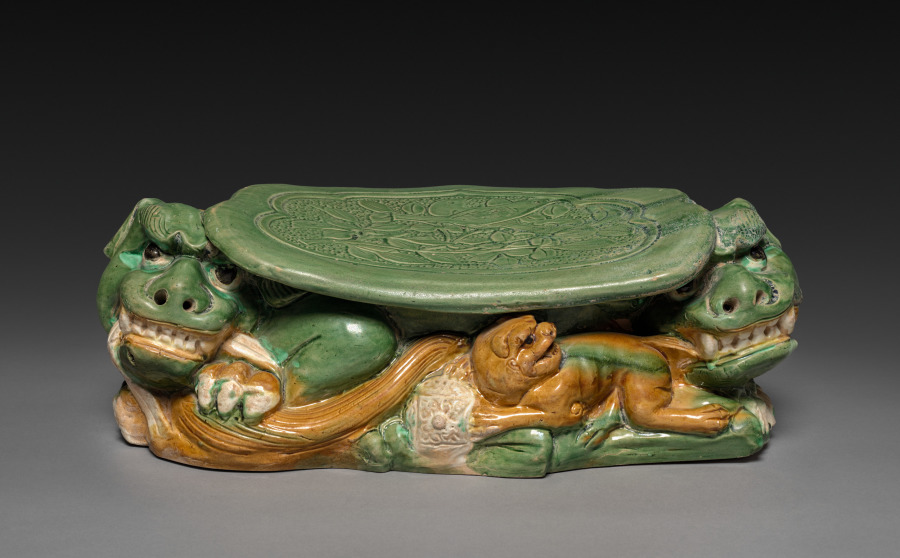
Headrest with Three Lions (916–1125) is in the Cleveland Museum of Art collection.
The work and its context
The museum's open-access catalogue describes the work:
Three lions—two ferocious adults and one playful cub—form the base of this Chinese headrest. Often found at burial sites, headrests probably had multiple uses for their owners, but their exact origins are unknown. As ceramic pillows, headrests were cooling on hot summer nights. As decorative objects, their form and ornamentation conveyed symbolic meaning for their owners. Lions are used as decoration on headrests because of their association with protection, as fierce beasts with the strength to ward off evil spirits while one sleeps. While headrests made of hard materials may seem unusual now, their use crosses time periods and cultures.
Object facts
- Title: Headrest with Three Lions
- Date: 916–1125
- Culture: China, Liao dynasty (916-1125)
- Type: Ceramic
- Technique: Glazed earthenware, sancai (three-color ware)
- Dimensions: Overall: 13.4 x 37.9 x 18.2 cm (5 1/4 x 14 15/16 x 7 3/16 in.)
- Collection: China - Liao Dynasty
- Department: Chinese Art
- Accession number: 2017.15
A detail from the museum
Headrests are not just decorative—they would also be slept on as pillows.
Collection credit
Gift of Donna and James Reid
Further reading listed by the museum
- Kaikodo journal. Vol XI, Spring 1999.
View the collection record
See the museum's photographs and full catalogue entry. Catalogue text is reproduced from the Cleveland Museum of Art's open-access data, with HTML formatting removed. This object and its supplied image are designated CC0.
Sources
More in Lifestyle
Keep reading