Helmet (1600s): Art, History and Details
Helmet at the Cleveland Museum of Art: 1600s, steel with gold and brass. Explore the work's context, creator attribution and collection history.
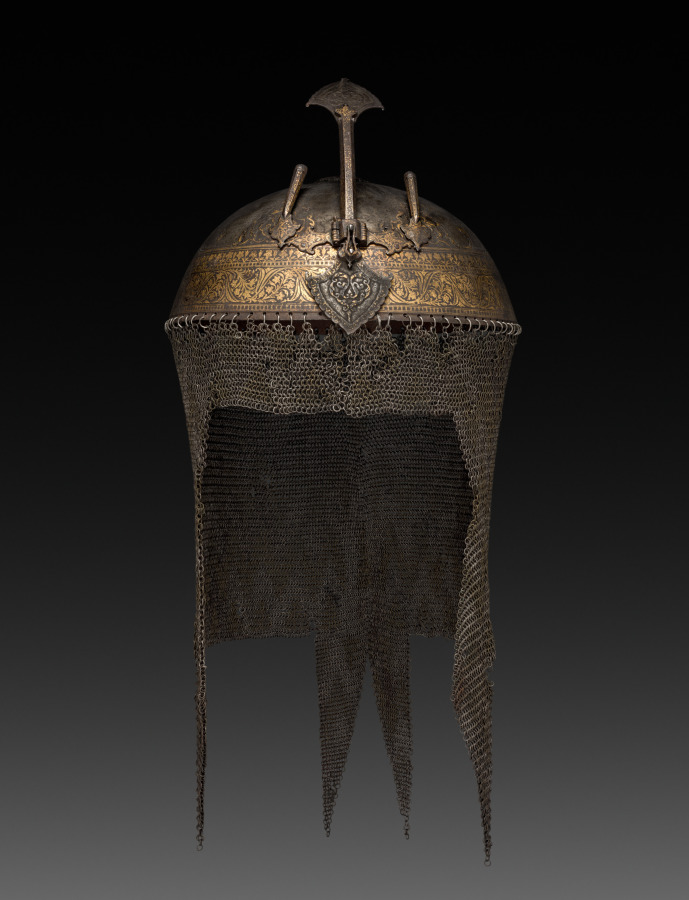
Helmet (1600s) is in the Cleveland Museum of Art collection.
The work and its context
The museum's open-access catalogue describes the work:
Mughal soldiers wore hemispherical steel helmets to battle. This helmet’s surface features decorative floral patterns created using a process called damascening, in which gold wire was hammered into steel grooves. A leaf-shaped guard slides down in front of the nose for protection. The short tubes on either side of the nasal guard were for holding plumes, most popularly black heron feathers or white aigrettes. The spike that would have been on the apex has broken off. Also missing is the stuffed cotton padding that lined the interior. Chain mail made up of interlocking steel wire rings protected the ears, neck, and shoulders.
Object facts
- Title: Helmet
- Date: 1600s
- Culture: North India
- Type: Arms and Armor
- Technique: steel with gold and brass
- Dimensions: Overall: 9.6 cm (3 3/4 in.); Diameter: 20.7 cm (8 1/8 in.)
- Collection: Indian Art
- Department: Indian and Southeast Asian Art
- Accession number: 1919.62
Collection credit
Gift of Mr. and Mrs. John L. Severance
Further reading listed by the museum
- American Art Association, New York. Ancient Arms and Weapons and Accoutrements. Theodore Offerman Collection. 7–8 February 1919.
- Gilchrist, Helen Ives. A Catalogue of the Collection of Arms & Armor Presented to the Cleveland Museum of Art by Mr. and Mrs. John Long Severance; 1916-1923. Cleveland: The Cleveland Museum of Art, 1924.
View the collection record
See the museum's photographs and full catalogue entry. Catalogue text is reproduced from the Cleveland Museum of Art's open-access data, with HTML formatting removed. This object and its supplied image are designated CC0.
Sources
More in Lifestyle
Keep reading