Hinggi (1800s): Art, History and Details
Hinggi at the Cleveland Museum of Art: 1800s, warp ikat; cotton. Explore the work's context, creator attribution and collection history.
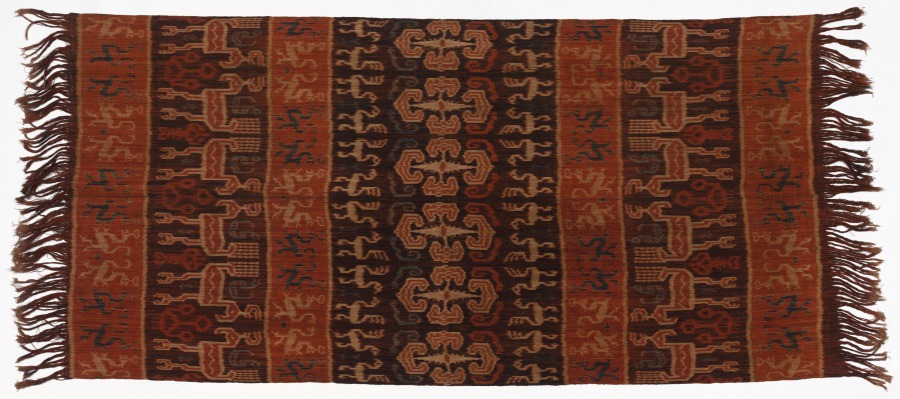
Hinggi (1800s) is in the Cleveland Museum of Art collection.
The work and its context
The museum's open-access catalogue describes the work:
Hinggi are large mantles woven in identical pairs, one worn around the waist and the other draped over the shoulder. As is characteristic of Sumbanese "hinggi," the design of this mantle relates to the traditional animistic religious and social structure of Sumba: the division of the cloth into horizontal bands reflects the layout of the traditional Sumbanese village, the rampant lions denote royal power, the trees of life between the cockatoos are symbols of fertility, and the geometric figure repeated across the center of the cloth is a symbol of royalty.
Object facts
- Title: Hinggi
- Date: 1800s
- Culture: Indonesia, Sumba, 19th century
- Type: Textile
- Technique: warp ikat; cotton
- Dimensions: Overall: 243.8 x 116.8 cm (96 x 46 in.)
- Collection: Textiles
- Department: Textiles
- Accession number: 1925.490
Collection credit
Purchase from the J. H. Wade Fund
View the collection record
See the museum's photographs and full catalogue entry. Catalogue text is reproduced from the Cleveland Museum of Art's open-access data, with HTML formatting removed. This object and its supplied image are designated CC0.
Sources
More in Lifestyle
Keep reading