Krishna Fluting (c. 1675–1700): Art, History and Details
Krishna Fluting at the Cleveland Museum of Art: c. 1675–1700, Gum tempera on paper. Explore the work's context, creator attribution and collection history.
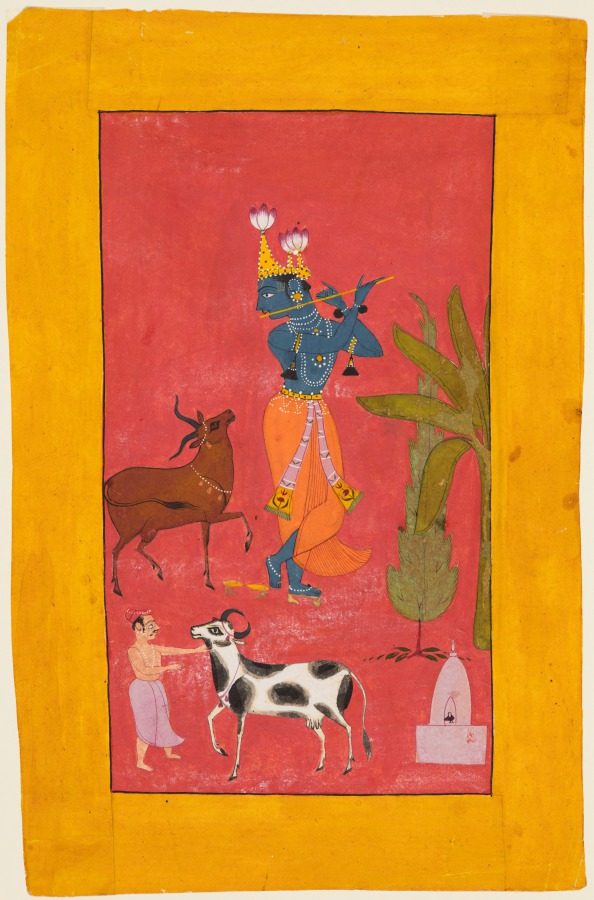
Krishna Fluting (c. 1675–1700) is in the Cleveland Museum of Art collection.
The work and its context
The museum's open-access catalogue describes the work:
Brilliantly set off against a flat red ground, Krishna’s blue body is the focus of the brown cow, lured to the god by the melody of his flute. Even the plantain and cypress trees seem to point in his direction. The figural style of the artists of this Rajput kingdom effortlessly shows the head turned in one direction, while the feet point the opposite way, contributing to Krishna’s superhuman appearance. Below, a herdsman struggles to manage a spotted cow in front of a temple with a linga, a stylized phallic form that identifies the presence of the Hindu god Shiva. This fluting scene refers to Krishna’s coming of age as a cowherd.
Object facts
- Title: Krishna Fluting
- Date: c. 1675–1700
- Culture: Northwestern India, Rajasthan, Rajput Kingdom of Bundi
- Type: Painting
- Technique: Gum tempera on paper
- Dimensions: Page: 21.9 x 14.3 cm (8 5/8 x 5 5/8 in.); Miniature: 17.2 x 9.5 cm (6 3/4 x 3 3/4 in.)
- Collection: Indian Art
- Department: Indian and Southeast Asian Art
- Accession number: 2018.157
Collection credit
Purchase and partial gift from the Catherine and Ralph Benkaim Collection; Severance and Greta Millikin Purchase Fund
View the collection record
See the museum's photographs and full catalogue entry. Catalogue text is reproduced from the Cleveland Museum of Art's open-access data, with HTML formatting removed. This object and its supplied image are designated CC0.
Sources
More in Lifestyle
Keep reading