Hinggi (early 1900s): Art, History and Details
Hinggi at the Cleveland Museum of Art: early 1900s, cotton, ikat dyed. Explore the work's context, creator attribution and collection history.
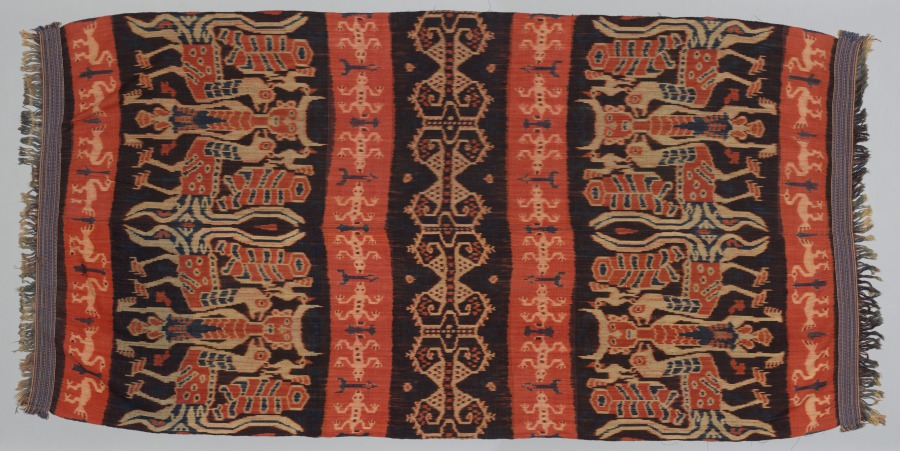
Hinggi (early 1900s) is in the Cleveland Museum of Art collection.
The work and its context
The museum's open-access catalogue describes the work:
On the Indonesian island of Sumba, hinggi were one of two types of textiles that were worn for ritual ceremonies and used as exchange gifts required on occasions of birth, marriage, or death. Traditionally, their designs reflect the religious and social structure of Sumbanese culture. The abstract motif in the center of this mantle represents an open shellfish, symbolic of royal power. The crocodile, seen here in the red bands to either side of the central band, is also associated with royal power as well as with Sumbanese mythology of the afterlife. The larger, standing male figures wearing horned headdresses are an extremely ancient motif, going back to the Neolithic period.
Object facts
- Title: Hinggi
- Date: early 1900s
- Culture: Indonesia, Sumba, early 20th century
- Type: Textile
- Technique: cotton, ikat dyed
- Dimensions: Overall: 239.4 x 117.2 cm (94 1/4 x 46 1/8 in.)
- Collection: Textiles
- Department: Textiles
- Accession number: 1981.217
Collection credit
Gift of Mrs. Martha G. Thomas
View the collection record
See the museum's photographs and full catalogue entry. Catalogue text is reproduced from the Cleveland Museum of Art's open-access data, with HTML formatting removed. This object and its supplied image are designated CC0.
Sources
More in Lifestyle
Keep reading