Howling Wolf (c. 500–200 BCE): Art, History and Details
Howling Wolf at the Cleveland Museum of Art: c. 500–200 BCE, wood with shell inlays. Explore the work's context, creator attribution and collection history.
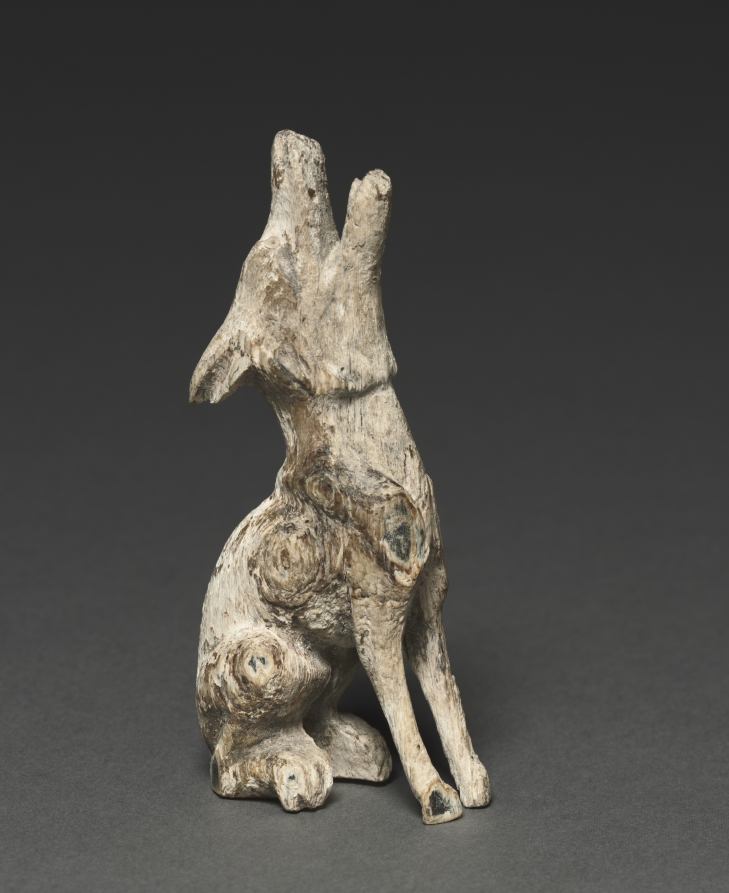
Howling Wolf (c. 500–200 BCE) is in the Cleveland Museum of Art collection.
The work and its context
The museum's open-access catalogue describes the work:
Its subject, size, materials, and naturalistic style suggest that this small sculpture was made by one of the nomadic peoples of Western and Central Asia—perhaps the Scythians, who, with the Medes, conquered the Assyrians. Works of art made by the Scythians and other nomadic groups are shown on the northwest wall of this gallery.
Object facts
- Title: Howling Wolf
- Date: c. 500–200 BCE
- Culture: Southern Siberia
- Type: Wood
- Technique: wood with shell inlays
- Dimensions: Overall: 11.1 x 3.3 x 5.9 cm (4 3/8 x 1 5/16 x 2 5/16 in.)
- Collection: Near Eastern Art
- Department: Egyptian and Ancient Near Eastern Art
- Accession number: 1986.26
A detail from the museum
The artist captured this wolf in mid-howl, depicting a wild animal in its natural element. The naturalistic carving of the wood depicts the animal's features, making it recognizable despite the eroded surface.
Collection credit
John L. Severance Fund
View the collection record
See the museum's photographs and full catalogue entry. Catalogue text is reproduced from the Cleveland Museum of Art's open-access data, with HTML formatting removed. This object and its supplied image are designated CC0.
Sources
More in Lifestyle
Keep reading