Hunchback Vessel (Aryballos) (1470–1521 (Thermoluminescence date, 1315–1615)): Art, History and Details
Hunchback Vessel (Aryballos) at the Cleveland Museum of Art: 1470–1521 (Thermoluminescence date, 1315–1615), ceramic. Explore the work's context, creator attribution and collection history.
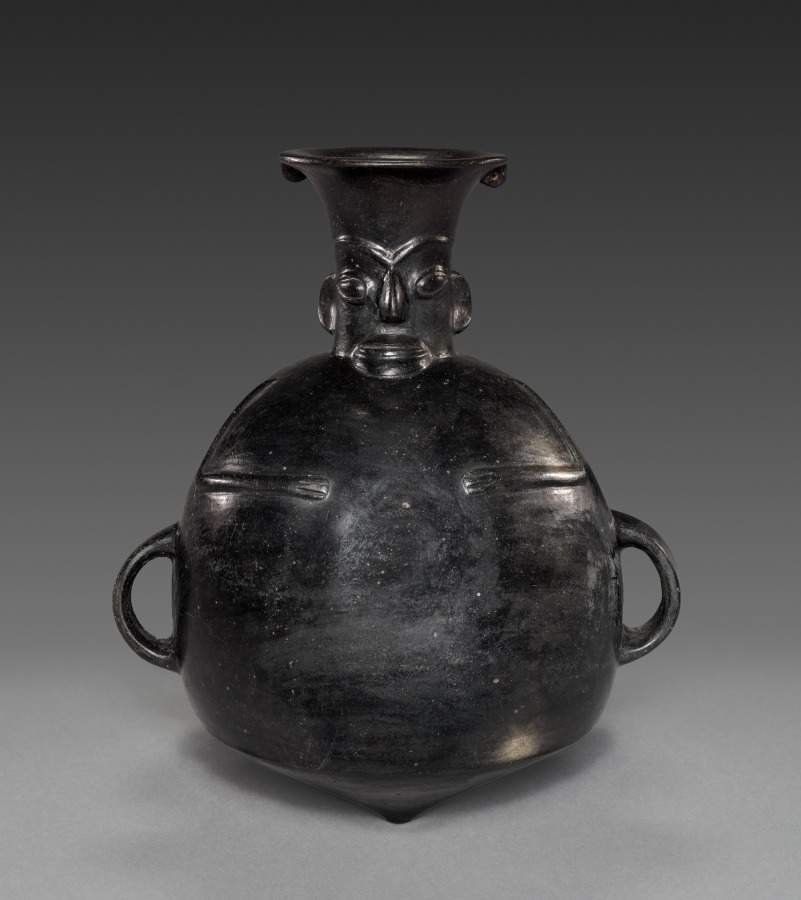
Hunchback Vessel (Aryballos) (1470–1521 (Thermoluminescence date, 1315–1615)) is in the Cleveland Museum of Art collection.
The work and its context
The museum's open-access catalogue describes the work:
This handsome vessel, along with the nearby double-chambered vessel, were made on the north coast after the Inka conquered the Chimú in the 1460s. Under Inka rule, many aspects of Chimú ceramic technology continued but new forms and subjects were introduced, such as the aryballos, a classic Inka vessel type. This example takes the form of a hunchback and may refer to the Inka predilection for employing hunchbacks as royal servants.
Object facts
- Title: Hunchback Vessel (Aryballos)
- Date: 1470–1521 (Thermoluminescence date, 1315–1615)
- Culture: Central Andes (Peru), Chimú-Inka style, Late Horizon period
- Type: Ceramic
- Technique: ceramic
- Dimensions: Overall: 18.5 x 15.5 x 12.5 cm (7 5/16 x 6 1/8 x 4 15/16 in.)
- Collection: AA - Andes
- Department: Art of the Americas
- Accession number: 2015.69
A detail from the museum
Hunchbacks seem to have functioned as servants in Inka royal palaces.
Collection credit
Gift of William R. Ott in memory of his wife, Carol E. Ott
View the collection record
See the museum's photographs and full catalogue entry. Catalogue text is reproduced from the Cleveland Museum of Art's open-access data, with HTML formatting removed. This object and its supplied image are designated CC0.
Sources
More in Lifestyle
Keep reading