Incense Burner with Flowers and Dots (1893–1914): Art, History and Details
Incense Burner with Flowers and Dots at the Cleveland Museum of Art: 1893–1914, Porcelain with creamy white translucent glaze and molded and incised design. Explore the work's context, creator attribution and collection history.
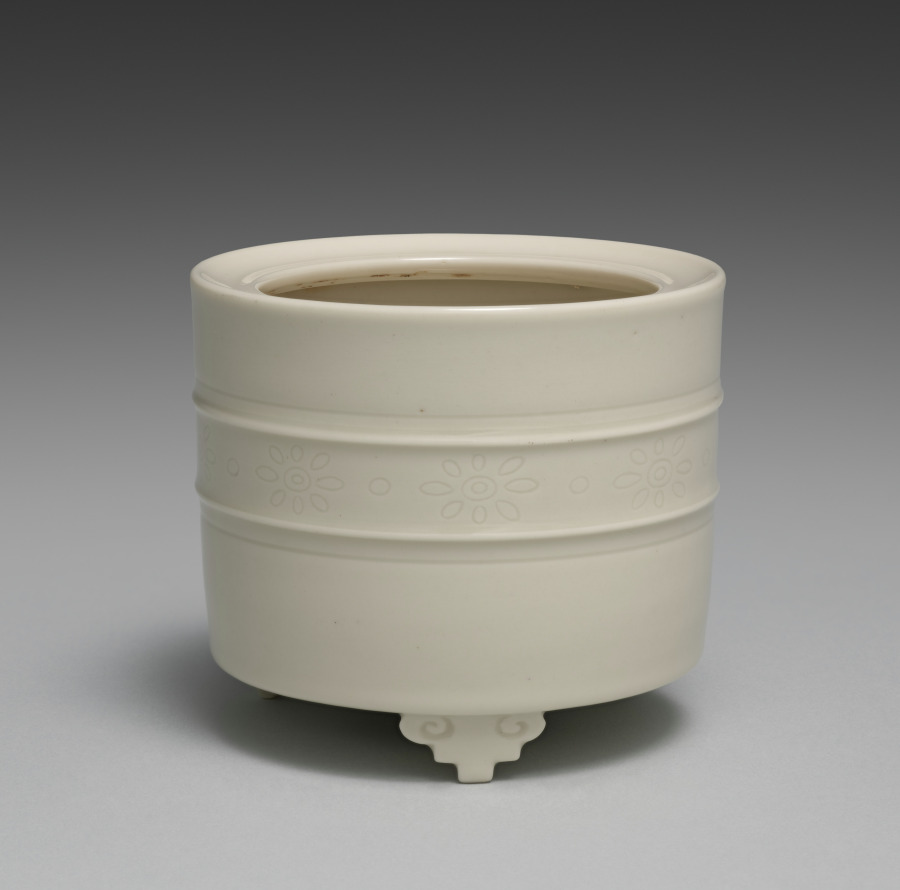
Incense Burner with Flowers and Dots (1893–1914) is in the Cleveland Museum of Art collection. The museum's creator attribution is Seifū Yohei III (Japanese, 1851–1914).
The work and its context
The museum's open-access catalogue describes the work:
Yohei III made incense burners in a wide variety of designs and styles. The body and glaze of this one are taihakuji, or “great white porcelain,” an important early invention Yohei III devised in 1872 that involved the combination of a distinctive translucent, creamy glaze over an ivory-colored clay body. The silver lid is meant to look like a single flower. The vessel has tapering legs with a combined curvilinear and geometric design; the bands encircling the middle have simple, incised flower motifs alternating with single dots.
Object facts
- Title: Incense Burner with Flowers and Dots
- Date: 1893–1914
- Creator attribution: Seifū Yohei III (Japanese, 1851–1914)
- Culture: Japan, Meiji period (1868–1912)
- Type: Ceramic
- Technique: Porcelain with creamy white translucent glaze and molded and incised design
- Collection: Japanese Art
- Department: Japanese Art
- Accession number: 2022.180.a
A detail from the museum
This cylindrical incense burner has molded decorations on its creamy body.
Collection credit
Gift of James and Christine Heusinger
Further reading listed by the museum
- Maezaki, Shinya and Sinéad Vilbar. Colors of Kyoto: The Seifū Yohei Ceramic Studio. Cleveland, OH: The Cleveland Museum of Art, 2023.
View the collection record
See the museum's photographs and full catalogue entry. Catalogue text is reproduced from the Cleveland Museum of Art's open-access data, with HTML formatting removed. This object and its supplied image are designated CC0.
Sources
More in Lifestyle
Keep reading
![Qur'an Manuscript Folio (recto; verso) [Right side of Bifolio] (1300s–1400s; Cleveland 1933.473.1)](https://openaccess-cdn.clevelandart.org/1933.473.1/1933.473.1_web.jpg)