India. Benares. Aurangzeb's Mosque, after a photo by Dr. Kurt Boeck (c. 1890–1910): Art, History and Details
India. Benares. Aurangzeb's Mosque, after a photo by Dr. Kurt Boeck at the Cleveland Museum of Art: c. 1890–1910, Photochrom. Explore the work's context, creator attribution and collection history.
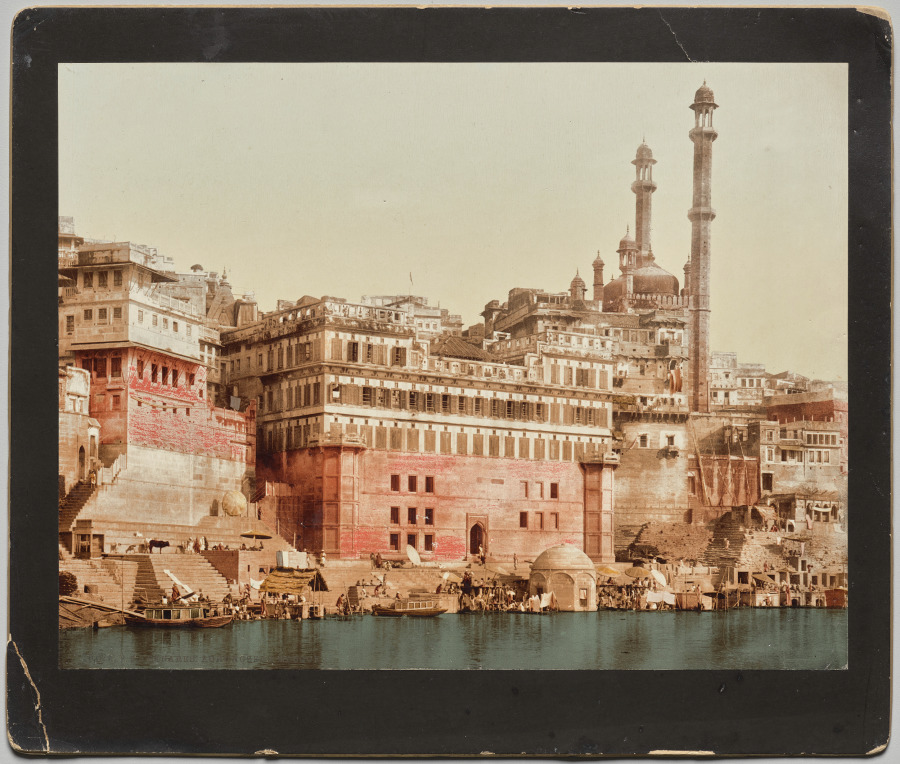
India. Benares. Aurangzeb's Mosque, after a photo by Dr. Kurt Boeck (c. 1890–1910) is in the Cleveland Museum of Art collection. The museum's creator attribution is Photoglob Co. (Zurich, active c. 1890–1910).
The work and its context
The museum's open-access catalogue describes the work:
The sixth Mughal emperor Aurangzeb, a very pious Muslim, had this enormous mosque built in a blend of Islamic and Hindu architectural styles. It was constructed in the late 1600s on the site of one of the most sacred ancient Hindu temples in the city of Varanasi (formerly Benares).
Object facts
- Title: India. Benares. Aurangzeb's Mosque, after a photo by Dr. Kurt Boeck
- Date: c. 1890–1910
- Creator attribution: Photoglob Co. (Zurich, active c. 1890–1910)
- Culture: India, 19th century
- Type: Photograph
- Technique: Photochrom
- Dimensions: Image: 20.5 x 26.7 cm (8 1/16 x 10 1/2 in.); Paper: 20.5 x 26.7 cm (8 1/16 x 10 1/2 in.); Mounted: 25.4 x 29.8 cm (10 x 11 3/4 in.)
- Collection: PH - Misc. 19th Century
- Department: Photography
- Accession number: 2019.185
A detail from the museum
The Taj Mahal was created as a tomb for Aurangzeb’s mother.
Collection credit
Gift of Catherine Glynn Benkaim and Barbara Timmer
Further reading listed by the museum
- Saha, Shandip. “Re-evaluating Aurangzeb's Attitude Towards Temples.” Mārg 77, i. 3 (March 2026): 98-105.
View the collection record
See the museum's photographs and full catalogue entry. Catalogue text is reproduced from the Cleveland Museum of Art's open-access data, with HTML formatting removed. This object and its supplied image are designated CC0.
Sources
More in Lifestyle
Keep reading