Initial C Excised from a Choral Book: St. Anthony with Antonite Friars (c. 1360–70): Art, History and Details
Initial C Excised from a Choral Book: St. Anthony with Antonite Friars at the Cleveland Museum of Art: c. 1360–70, ink, tempera, and gold on vellum. Explore the work's context, creator attribution and collection history.
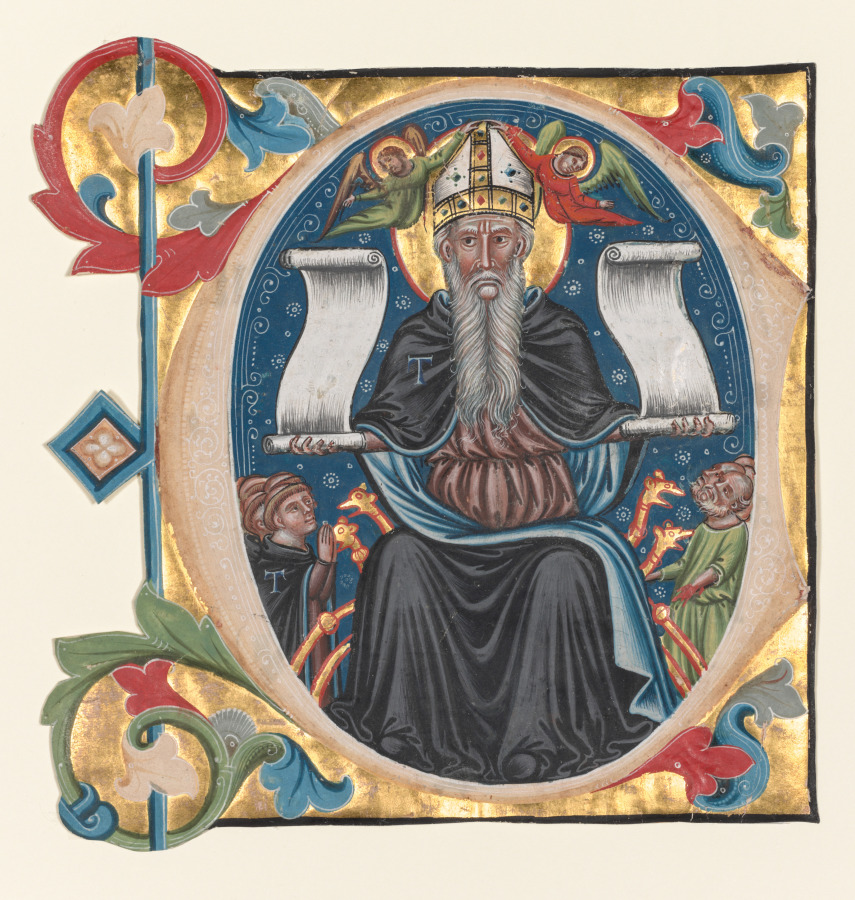
Initial C Excised from a Choral Book: St. Anthony with Antonite Friars (c. 1360–70) is in the Cleveland Museum of Art collection. The museum's creator attribution is Giustino di Gherardino da Forlì (Italian, 1325–1425).
The work and its context
The museum's open-access catalogue describes the work:
The focus of this initial is an imposing portrait of Saint Anthony, one of the original Christian “desert hermits.” Anthony retired into the Egyptian desert where he remained in solitude for many years. He is generally regarded as the founder of monasticism and, along with Saints Jerome, Ambrose, and Gregory the Great, one of the four fathers of the Christian Church. Anthony is identified here by his monastic garb and by the tau (T-shaped Egyptian cross) on the shoulder of his cloak. The religious order bearing his name was founded in the 11th century, and numerous monasteries were founded in his honor. Members of this order are depicted in the lower left.
Object facts
- Title: Initial C Excised from a Choral Book: St. Anthony with Antonite Friars
- Date: c. 1360–70
- Creator attribution: Giustino di Gherardino da Forlì (Italian, 1325–1425)
- Culture: Italy, Venice
- Type: Manuscript
- Technique: ink, tempera, and gold on vellum
- Dimensions: Sheet: 18.5 x 17.5 cm (7 5/16 x 6 7/8 in.)
- Collection: MED - Manuscript Illuminations
- Department: Medieval Art
- Accession number: 1954.796
Collection credit
Purchase from the J. H. Wade Fund
Further reading listed by the museum
- Silver, Nathaniel. 2016. ""Cum Signo T Quod Potentiam Vocant": The Art and Architecture of the Antonite Hospitallers in Trecento Venice". Mitteilungen Des Kunsthistorischen Institutes in Florenz / Hrsg.: Kunsthistorisches Institut in Florenz, Max-Planck-Institut. 58: 27-57.
View the collection record
See the museum's photographs and full catalogue entry. Catalogue text is reproduced from the Cleveland Museum of Art's open-access data, with HTML formatting removed. This object and its supplied image are designated CC0.
Sources
More in Lifestyle
Keep reading