Intaglio: Imperial Eagle (c. 1–25 CE): Art, History and Details
Intaglio: Imperial Eagle at the Cleveland Museum of Art: c. 1–25 CE, carnelian. Explore the work's context, creator attribution and collection history.
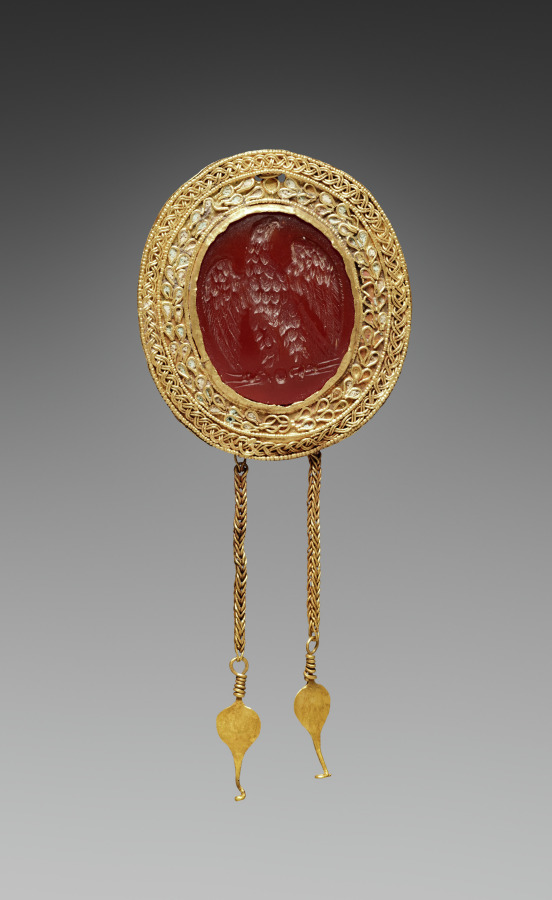
Intaglio: Imperial Eagle (c. 1–25 CE) is in the Cleveland Museum of Art collection.
The work and its context
The museum's open-access catalogue describes the work:
This intaglio, or engraved gem, depicts an eagle with wings partially spread, a lightning bolt clutched in its feet. The bird looks to the upper right, suggesting it may be about to take flight. This gem is expertly carved, with each individual feather of the eagle described with thin lines. The eagle was a symbol associated with the Roman imperial family, Roman military, and Jupiter, the supreme Roman deity. The setting is likely ancient, and it retains traces of enameling in some loops.
Object facts
- Title: Intaglio: Imperial Eagle
- Date: c. 1–25 CE
- Culture: Italy, Rome, probably Augustan
- Type: Jewelry
- Technique: carnelian
- Dimensions: Diameter: 3.5 cm (1 3/8 in.)
- Collection: GR - Roman
- Department: Greek and Roman Art
- Accession number: 1977.13
A detail from the museum
According to the Roman author Pliny, ancient carnelian was primarily sourced from India.
Collection credit
Purchase from the J. H. Wade Fund
Further reading listed by the museum
- Lee, Sherman E. “The Year in Review for 1977.” The Bulletin of the Cleveland Museum of Art 65, no. 1 (1978): 2–42.
View the collection record
See the museum's photographs and full catalogue entry. Catalogue text is reproduced from the Cleveland Museum of Art's open-access data, with HTML formatting removed. This object and its supplied image are designated CC0.
Sources
More in Lifestyle
Keep reading