Treasure Box (Wakahuia) (1800s): Art, History and Details
Treasure Box (Wakahuia) at the Cleveland Museum of Art: 1800s, wood with abalone shell. Explore the work's context, creator attribution and collection history.
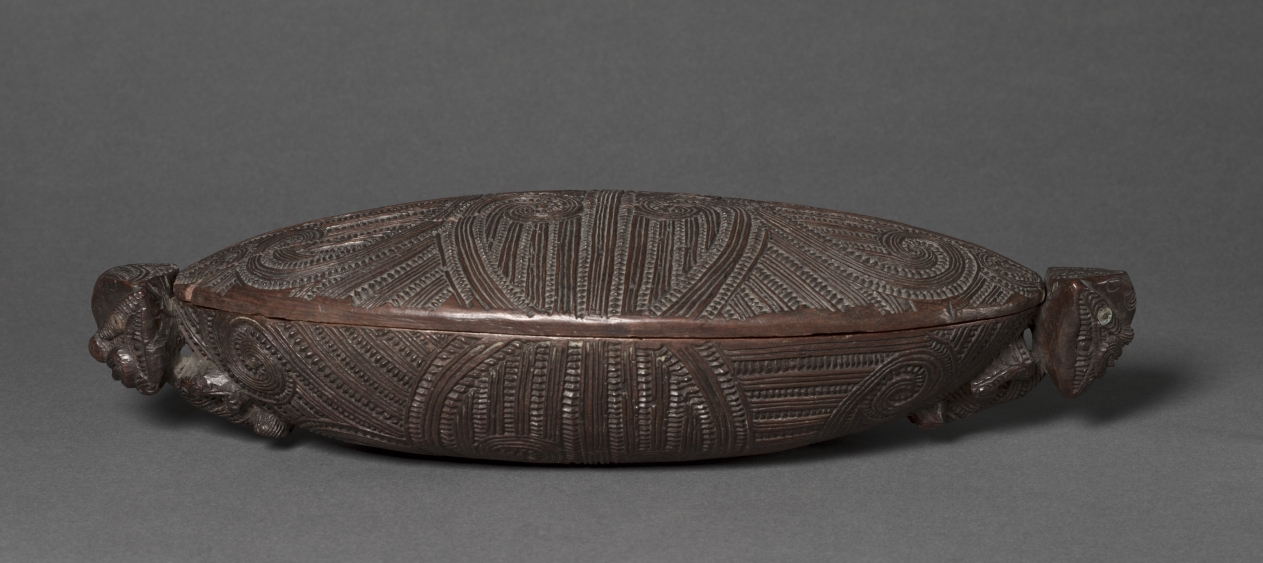
Treasure Box (Wakahuia) (1800s) is in the Cleveland Museum of Art collection.
The work and its context
The museum's open-access catalogue describes the work:
Decorated with low-relief spiral designs and small carved figures at each end, the treasure box was used to store ornaments worn by chiefs: feathers of the huia bird, combs, and pendants (hei-tiki). Because the heads and necks of high-ranking Maori chiefs were tapu, or sacred, their personal adornments were dangerous to children or individuals of lower rank. Treasure boxes were therefore hung from the rafters of the chief's house. Boxes like this one were in use when Captain Cook visited New Zealand in 1769-70.
Object facts
- Title: Treasure Box (Wakahuia)
- Date: 1800s
- Culture: Polynesia, New Zealand, Maori people, 19th century
- Type: Sculpture
- Technique: wood with abalone shell
- Dimensions: Overall: 17.2 cm (6 3/4 in.)
- Collection: Oceanic Art
- Department: Oceania
- Accession number: 1961.405
Collection credit
The Mary Spedding Milliken Memorial Collection, Gift of William Mathewson Milliken
Further reading listed by the museum
- Sims, Lowery Stokes. The Persistence of Geometry: Form, Content, and Culture in the Collection of the Cleveland Museum of Art. Cleveland: Cleveland Museum of Art, 2006.
View the collection record
See the museum's photographs and full catalogue entry. Catalogue text is reproduced from the Cleveland Museum of Art's open-access data, with HTML formatting removed. This object and its supplied image are designated CC0.
Sources
More in Lifestyle
Keep reading