Interior of a Cathedral (c. 1820s): Art, History and Details
Interior of a Cathedral at the Cleveland Museum of Art: c. 1820s, gray and brown wash with point of brush and pen and brown ink with watercolor heightened with gouache. Explore the work's context, creator attribution and collection history.
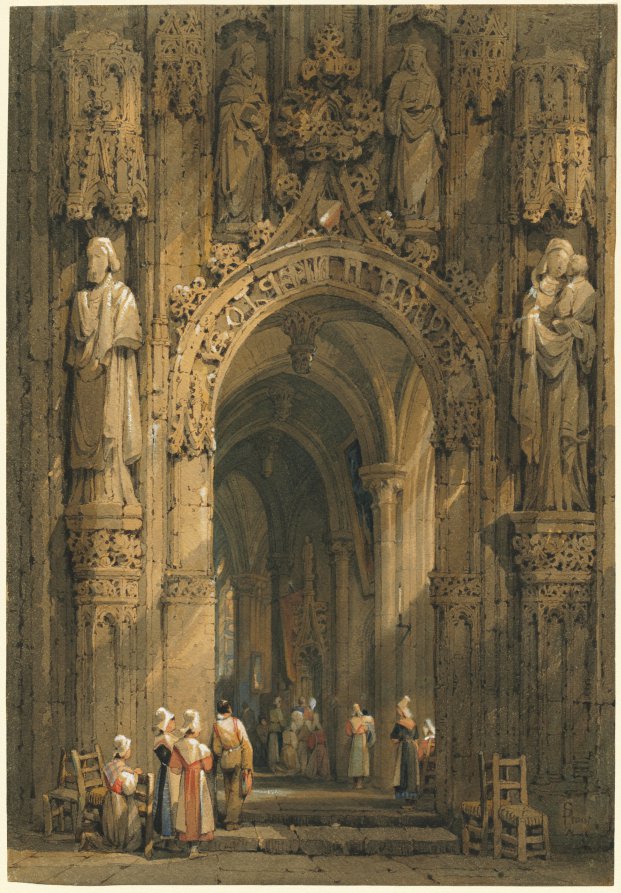
Interior of a Cathedral (c. 1820s) is in the Cleveland Museum of Art collection. The museum's creator attribution is Samuel Prout (British, 1783–1852).
The work and its context
The museum's open-access catalogue describes the work:
Samuel Prout’s watercolors of picturesque views and architectural marvels of Italy, France, Germany, and Switzerland attracted a wide audience, helped inspire travel, and shaped the English perception of Continental Europe. The influential critic John Ruskin became a close friend, neighbor, and great supporter of the artist, declaring in the Art Journal in 1849 that no other artist expressed architectural detail in more "splendid accumulation" or "patient love" than Prout.
Object facts
- Title: Interior of a Cathedral
- Date: c. 1820s
- Creator attribution: Samuel Prout (British, 1783–1852)
- Culture: England, 19th century
- Type: Drawing
- Technique: gray and brown wash with point of brush and pen and brown ink with watercolor heightened with gouache
- Dimensions: Sheet: 43.3 x 30 cm (17 1/16 x 11 13/16 in.)
- Collection: DR - British
- Department: Drawings
- Accession number: 1940.560
A detail from the museum
Rather than showing a specific church, this drawing seems to depict an amalgamation of Gothic architecture, capturing a mood and not a particular place.
Collection credit
Bequest of James Parmelee
Further reading listed by the museum
- Francis, Henry S. "The Bequest of James Parmelee." Bulletin of the Cleveland Museum of Art 28, no. 2 (February 1941): 15-27, 31.
- Lemonedes, Heather. British Drawings: The Cleveland Museum of Art. Exh. Cat. Cleveland, OH: Cleveland Museum of Art, 2013.
View the collection record
See the museum's photographs and full catalogue entry. Catalogue text is reproduced from the Cleveland Museum of Art's open-access data, with HTML formatting removed. This object and its supplied image are designated CC0.
Sources
More in Lifestyle
Keep reading