Key (1–100 CE): Art, History and Details
Key at the Cleveland Museum of Art: 1–100 CE, iron tang, bronze handle. Explore the work's context, creator attribution and collection history.
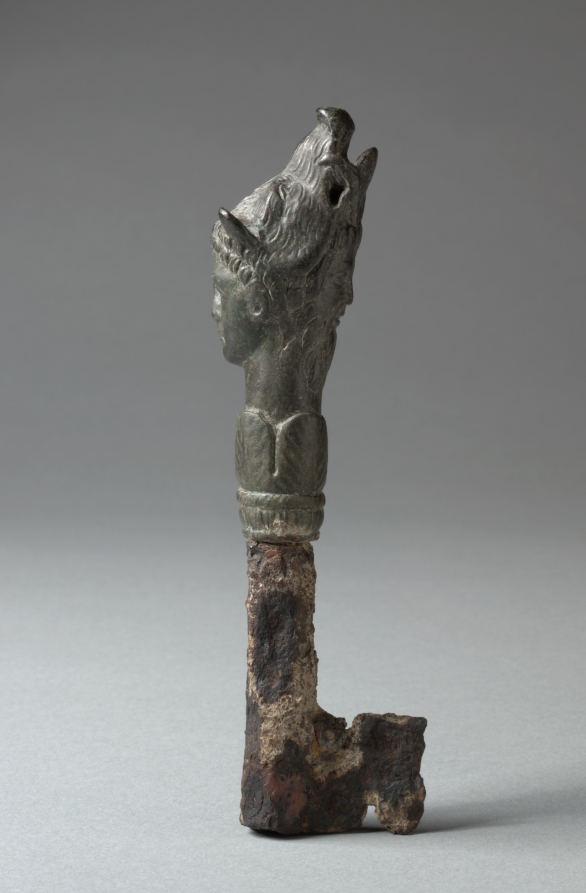
Key (1–100 CE) is in the Cleveland Museum of Art collection.
The work and its context
The museum's open-access catalogue describes the work:
Cleverly designed with an iron bit attached to a bronze handle, this key can be admired from all angles. While the handle terminates in the head of a ferocious boar, farther down are back-to-back heads of Mercury—his wings formed from the ears of the boar—and his goat-legged, horned son, Silvanus (also known as Pan). Given the rustic nature of the heads, scholars have suggested that the key might once have unlocked a country villa.
Object facts
- Title: Key
- Date: 1–100 CE
- Culture: Italy, Roman
- Type: Metalwork
- Technique: iron tang, bronze handle
- Dimensions: Overall: 15.6 cm (6 1/8 in.)
- Collection: GR - Roman
- Department: Greek and Roman Art
- Accession number: 1952.586
A detail from the museum
The bronze handle of this key combines three heads: of a boar, Mercury, and Silvanus.
Collection credit
John L. Severance Fund
Further reading listed by the museum
- Kozloff, Arielle P. "Keys of Ancient Rome." The Bulletin of the Cleveland Museum of Art 80, no. 9 (1993).
View the collection record
See the museum's photographs and full catalogue entry. Catalogue text is reproduced from the Cleveland Museum of Art's open-access data, with HTML formatting removed. This object and its supplied image are designated CC0.
Sources
More in Lifestyle
Keep reading