Lar (1–25 CE): Art, History and Details
Lar at the Cleveland Museum of Art: 1–25 CE, bronze with copper inlays. Explore the work's context, creator attribution and collection history.
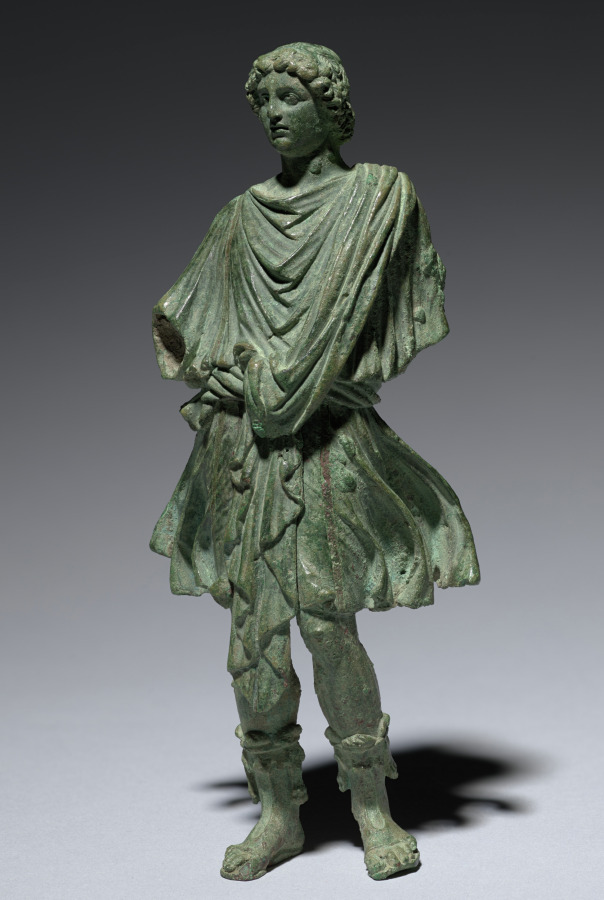
Lar (1–25 CE) is in the Cleveland Museum of Art collection.
The work and its context
The museum's open-access catalogue describes the work:
This youthful bronze figure wears a short tunic with copper inlaid stripes and open-toed boots with animal-skin liners. The figure’s arms are missing, but based on other surviving examples, they likely held a libation dish and cornucopia. Even without these attributes, the figure can be identified through dress and stance as a type of Lar, or domestic deity, known as the Lar Familiaris (Household Lar), standing in a characteristic "quiet pose." Other types of Lares include the Lares Compitales and Lares Augusti (Lares of crossroads and of Augustus, respectively).
Object facts
- Title: Lar
- Date: 1–25 CE
- Culture: Italy, Rome, Early Imperial period
- Type: Sculpture
- Technique: bronze with copper inlays
- Dimensions: Overall: 14.5 cm (5 11/16 in.)
- Collection: GR - Roman
- Department: Greek and Roman Art
- Accession number: 1987.3
A detail from the museum
This statuette likely stood with other small bronzes in a household shrine called a lararium.
Collection credit
Purchase from the J. H. Wade Fund
Further reading listed by the museum
- Kozloff, Arielle P., David Gordon Mitten, and Suzannah Fabing. The Gods Delight: The Human Figure in Classical Bronze. Cleveland, Ohio: Published by the Cleveland Museum of Art in cooperation with Indiana University Press, 1988.
- Turner, Evan H. “The Year in Review for 1987.” The Bulletin of the Cleveland Museum of Art 75, no. 2 (February 1988): 30–71.
View the collection record
See the museum's photographs and full catalogue entry. Catalogue text is reproduced from the Cleveland Museum of Art's open-access data, with HTML formatting removed. This object and its supplied image are designated CC0.
Sources
More in Lifestyle
Keep reading