Layla and Majnun in the wilderness with animals, from a Khamsa (Quintet) of Amir Khusrau Dihlavi (c. 1590–1600): Art, History and Details
Layla and Majnun in the wilderness with animals, from a Khamsa (Quintet) of Amir Khusrau Dihlavi at the Cleveland Museum of Art: c. 1590–1600, Gum tempera, ink, and gold on paper. Explore the work's context, creator attribution and collecti
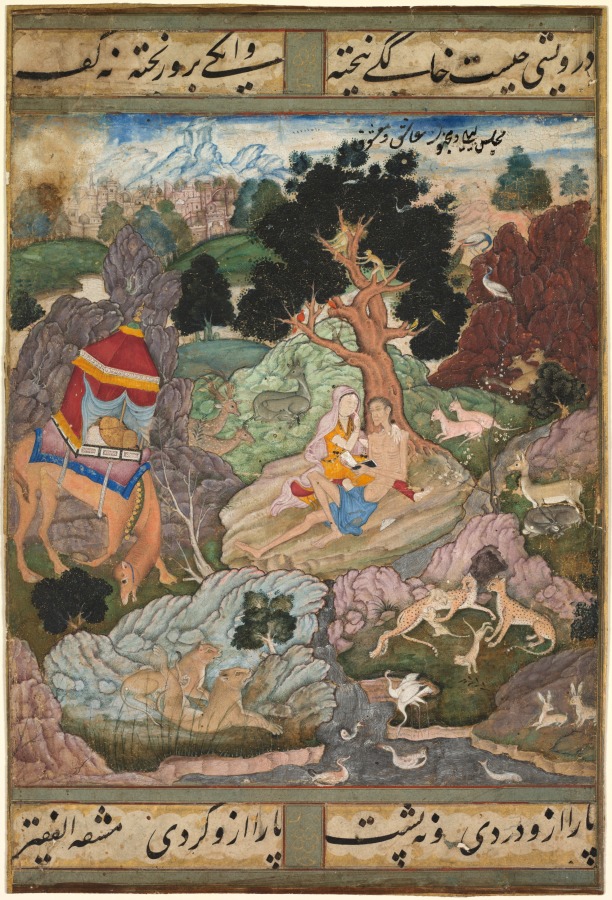
Layla and Majnun in the wilderness with animals, from a Khamsa (Quintet) of Amir Khusrau Dihlavi (c. 1590–1600) is in the Cleveland Museum of Art collection. The museum's creator attribution is Sanwalah (Indian, active c. 1580–1600).
The work and its context
The museum's open-access catalogue describes the work:
Nestled in the multicolored rocks are the reunited lovers Layla and Majnun, forced by society to remain separated for years. Majnun’s name means “madman,” since the separation drove him past the brink of sanity. Exiling himself to the wilderness, he became emaciated. When Layla found him after a prophetic dream, the wild animals gathered around, drawn to the purity and depth of their love. This painting illustrates a version of the story as told by an Indian author who wrote in Persian. He altered the ending given by previous Persian authors to the ancient Bedouin tale that originated among nomadic tribes of the Arabian Peninsula, in which Layla dies before the couple can be physically reunited.
Object facts
- Title: Layla and Majnun in the wilderness with animals, from a Khamsa (Quintet) of Amir Khusrau Dihlavi
- Date: c. 1590–1600
- Creator attribution: Sanwalah (Indian, active c. 1580–1600)
- Type: Painting
- Technique: Gum tempera, ink, and gold on paper
- Dimensions: Page: 24.9 x 16.8 cm (9 13/16 x 6 5/8 in.); Painting: 18.6 x 16.2 cm (7 5/16 x 6 3/8 in.)
- Collection: Indian Art - Mughal
- Department: Indian and Southeast Asian Art
- Accession number: 2013.301
A detail from the museum
White paint, prone to flaking, chipped off her face, revealing the underdrawing.
Collection credit
Gift in honor of Madeline Neves Clapp; Gift of Mrs. Henry White Cannon by exchange; Bequest of Louise T. Cooper; Leonard C. Hanna Jr. Fund; From the Catherine and Ralph Benkaim Collection
Further reading listed by the museum
- Mace, Sonya Rhie, Mohsen Ashtiany, Catherine Glynn, Pedro Moura Carvalho, Marcus Fraser, and Ruby Lal. Mughal Paintings: Art and Stories: the Cleveland Museum of Art. London: D Giles Limited, 2016.
- Archives of Asian Art 64, no. 2 (2014): 226.
- Munroe, Nazanin Hedayat. Sufi Lovers, Safavid Silks and Early Modern Identity. Amsterdam: Amsterdam University Press, 2023.
View the collection record
See the museum's photographs and full catalogue entry. Catalogue text is reproduced from the Cleveland Museum of Art's open-access data, with HTML formatting removed. This object and its supplied image are designated CC0.
Sources
More in Lifestyle
Keep reading


