Lime Dipper (c. 1–800 CE): Art, History and Details
Lime Dipper at the Cleveland Museum of Art: c. 1–800 CE, gold. Explore the work's context, creator attribution and collection history.
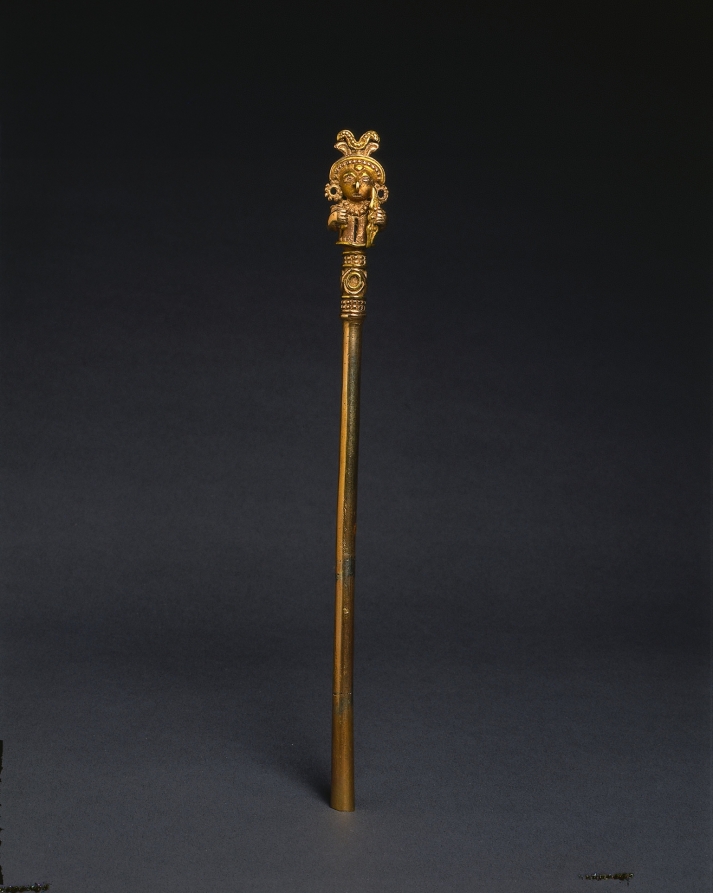
Lime Dipper (c. 1–800 CE) is in the Cleveland Museum of Art collection.
The work and its context
The museum's open-access catalogue describes the work:
Coca-leaf chewing was a widespread ritual in ancient South America. Utensils included a container and a dipper or spoon for powdered lime (made from seashells), added to the coca to enhance its gentle, stimulating effect. Colombian cultures are especially known for transforming these utensils into works of art made of precious metal. The image on the tallest dipper is wonderfully complex. A serpent coils at the bottom, beneath a snarling animal with a huge, vertical tail. This animal has a tiny monkey on its back; the monkey also has a huge tail, which rests on the first animal’s head like a headdress. This intricate image was created with the lost-wax casting process.
Object facts
- Title: Lime Dipper
- Date: c. 1–800 CE
- Culture: Colombia, Calima region, Yotoco style
- Type: Metalwork
- Technique: gold
- Dimensions: Overall: 22.8 cm (9 in.)
- Collection: AA - Intermediate Region
- Department: Art of the Americas
- Accession number: 1947.30
Collection credit
Purchase from the J. H. Wade Fund
Further reading listed by the museum
- The Cleveland Museum of Art. Handbook of the Cleveland Museum of Art/1966. Cleveland, OH: The Cleveland Museum of Art, 1966.
- The Cleveland Museum of Art. Handbook of the Cleveland Museum of Art/1969. Cleveland, OH: The Cleveland Museum of Art, 1969.
- The Cleveland Museum of Art. Handbook of the Cleveland Museum of Art/1978. Cleveland, OH: The Cleveland Museum of Art, 1978.
View the collection record
See the museum's photographs and full catalogue entry. Catalogue text is reproduced from the Cleveland Museum of Art's open-access data, with HTML formatting removed. This object and its supplied image are designated CC0.
Sources
More in Lifestyle
Keep reading