Male Head, possibly a Yaksha (300s BCE): Art, History and Details
Male Head, possibly a Yaksha at the Cleveland Museum of Art: 300s BCE, terracotta. Explore the work's context, creator attribution and collection history.
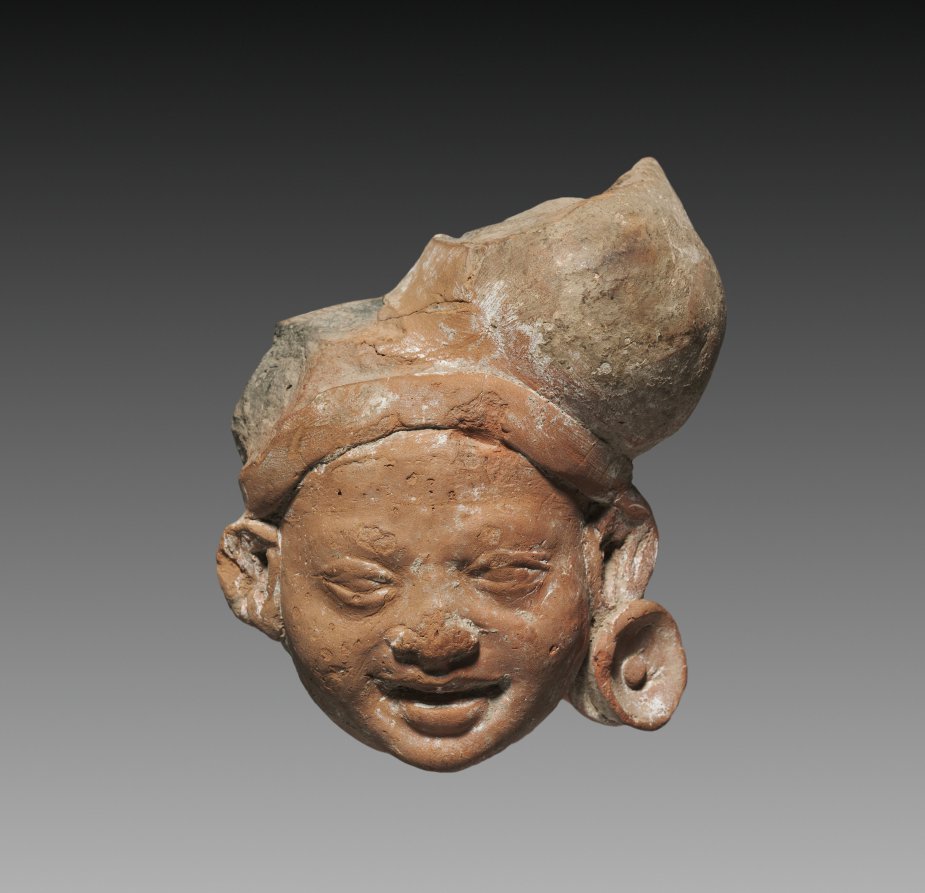
Male Head, possibly a Yaksha (300s BCE) is in the Cleveland Museum of Art collection.
The work and its context
The museum's open-access catalogue describes the work:
The large turban and earring suggest that this head may have belonged to a yaksha, a nature divinity worshipped for wealth and prosperity. The small scale and terracotta material imply that it may have been installed on a domestic shrine. The naturalism of the fleshy face and parted mouth are stylistic features of sculptures from the Maurya period, and this work was found at the Maurya capital of Pataliputra.
Object facts
- Title: Male Head, possibly a Yaksha
- Date: 300s BCE
- Culture: Northeastern India, Bihar, Patna, Bulandibagh
- Type: Sculpture
- Technique: terracotta
- Dimensions: Overall: 10.5 cm (4 1/8 in.)
- Collection: Indian Art - Maurya
- Department: Indian and Southeast Asian Art
- Accession number: 1986.72
Collection credit
Andrew R. and Martha Holden Jennings Fund
Further reading listed by the museum
- Turner, Evan H. "The Year in Review for 1986." The Bulletin of the Cleveland Museum of Art 74, no. 2 (1987): 38-79.
View the collection record
See the museum's photographs and full catalogue entry. Catalogue text is reproduced from the Cleveland Museum of Art's open-access data, with HTML formatting removed. This object and its supplied image are designated CC0.
Sources
More in Lifestyle
Keep reading