Mantel (c. 1730): Art, History and Details
Mantel at the Cleveland Museum of Art: c. 1730, marble. Explore the work's context, creator attribution and collection history.
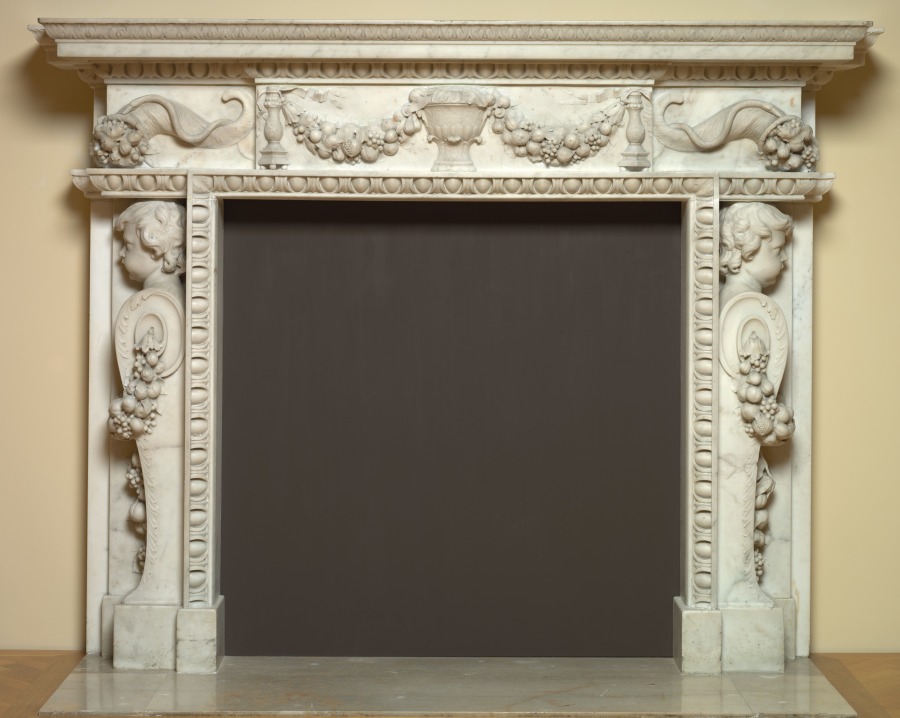
Mantel (c. 1730) is in the Cleveland Museum of Art collection. The museum's creator attribution is Inigo Jones (English, 1573–1652); William Kent (British, 1685–1748).
The work and its context
The museum's open-access catalogue describes the work:
The cornucopias and scroll-shaped brackets capped by the bust of the youthful Roman god, Mercury, were inspired by the work of Inigo Jones, one of the first British architects of great renown. The mantel was originally installed in Wanstead House, formerly located on the outskirts of London. Working opposite the architect, Colen Campbell (1676–1729), William Kent completed the interior decoration of the estate and likely produced this mantel as well. When Wanstead House was pulled down in 1822, the Duke of Hamilton purchased the chimney piece and three others from Wanstead House to display in his own home near Glasgow, Scotland.
Object facts
- Title: Mantel
- Date: c. 1730
- Creator attribution: Inigo Jones (English, 1573–1652); William Kent (British, 1685–1748)
- Culture: England, 18th century
- Type: Furniture and woodwork
- Technique: marble
- Dimensions: Overall: 153.7 x 204.4 cm (60 1/2 x 80 1/2 in.)
- Collection: Furniture
- Department: Decorative Art and Design
- Accession number: 1944.472
A detail from the museum
Here the presence of the Roman god of trade and abundance (Mercury) within the decorative scheme of this mantel alludes to prosperity and bounty.
Collection credit
Elisabeth Severance Prentiss Fund
Further reading listed by the museum
- No existing citations
View the collection record
See the museum's photographs and full catalogue entry. Catalogue text is reproduced from the Cleveland Museum of Art's open-access data, with HTML formatting removed. This object and its supplied image are designated CC0.
Sources
More in Lifestyle
Keep reading