Maru Ragini, from a Ragamala (Garland of Melodies) (1650–80): Art, History and Details
Maru Ragini, from a Ragamala (Garland of Melodies) at the Cleveland Museum of Art: 1650–80, Gum tempera, ink, and gold on paper. Explore the work's context, creator attribution and collection history.
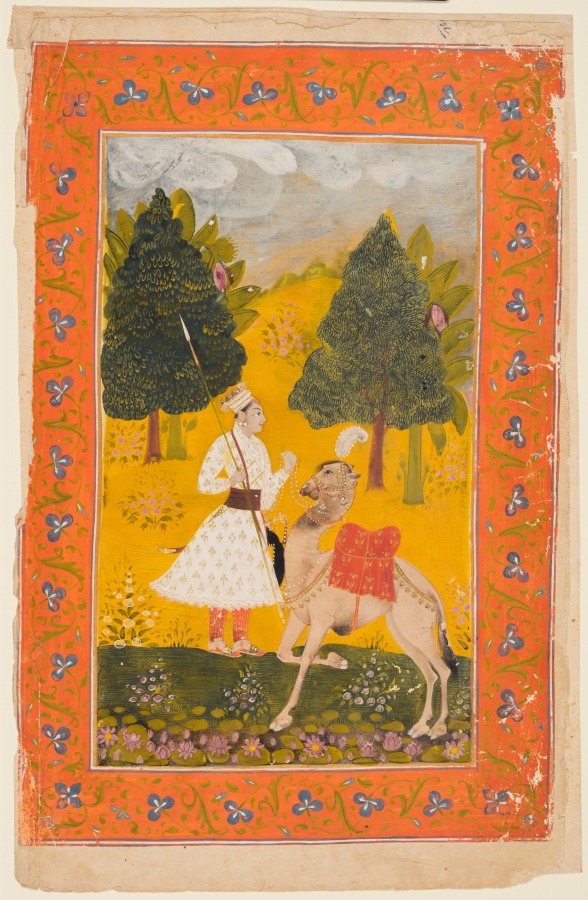
Maru Ragini, from a Ragamala (Garland of Melodies) (1650–80) is in the Cleveland Museum of Art collection.
The work and its context
The museum's open-access catalogue describes the work:
A Rajput warrior holding a spear, with piercing dagger (katar) and sword attached to his belt, stands alone with his camel in a landscape. They have arrived at the banks of a stream, verdant in contrast to the intense hot yellow of the ground behind them. The musical mode associated with this painting is based on folk melodies of Rajasthan, where local stories feature a hero with a camel mount.
Object facts
- Title: Maru Ragini, from a Ragamala (Garland of Melodies)
- Date: 1650–80
- Culture: Northwestern India, Rajasthan, Rajput Kingdom of Amber or Southwestern India, Deccan
- Type: Painting
- Technique: Gum tempera, ink, and gold on paper
- Dimensions: Painting: 26 x 17.6 cm (10 1/4 x 6 15/16 in.)
- Collection: Indian Art
- Department: Indian and Southeast Asian Art
- Accession number: 2018.168
A detail from the museum
The warrior’s belt is called a kamarband in Persian and is the origin of the English cummerbund.
Collection credit
Purchase and partial gift from the Catherine and Ralph Benkaim Collection; Severance and Greta Millikin Purchase Fund
View the collection record
See the museum's photographs and full catalogue entry. Catalogue text is reproduced from the Cleveland Museum of Art's open-access data, with HTML formatting removed. This object and its supplied image are designated CC0.
Sources
More in Lifestyle
Keep reading