Mask (mbap mteng): Elephant (aka) (early 1900s): Art, History and Details
Mask (mbap mteng): Elephant (aka) at the Cleveland Museum of Art: early 1900s, Cotton, burlap, glass beads, twine, leather, and wood. Explore the work's context, creator attribution and collection history.
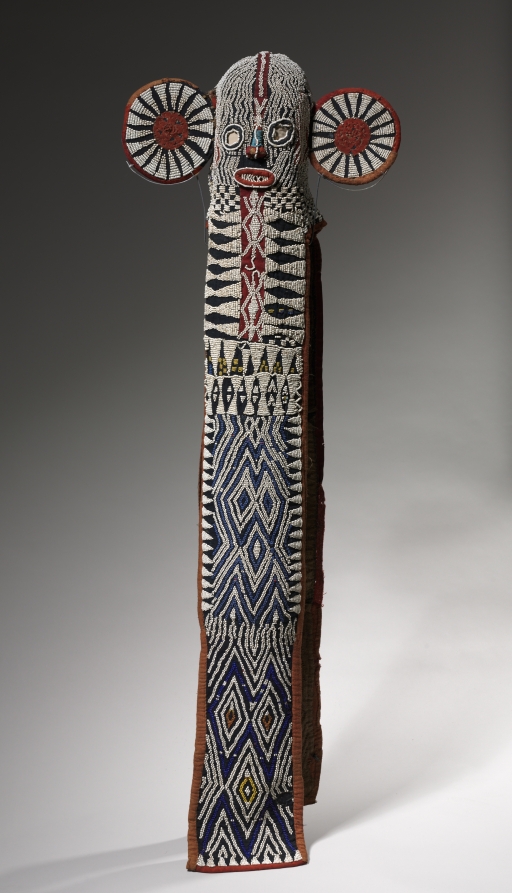
Mask (mbap mteng): Elephant (aka) (early 1900s) is in the Cleveland Museum of Art collection.
The work and its context
The museum's open-access catalogue describes the work:
The name given to masks like this, mbap mteng, means "animal with huge ears." In the Cameroon Grassfields kingdoms, the elephant signifies power, authority, prestige, and leadership. The colorful glass beads that decorate the mask’s surface were imported from Venice and Bohemia (in Europe) and signal wealth and prosperity. Its geometric patterns include triangles that evoke the leopard, another animal linked with royal power. Members of Kuosi, an elite male society, wore such elephant masks for ritual dances and funerary ceremonies. This mask would have been worn with a costume that included a feather headdress
Object facts
- Title: Mask (mbap mteng): Elephant (aka)
- Date: early 1900s
- Culture: Africa, Central Africa, Cameroon, Grassfields region, Bamileke-style maker
- Type: Mask
- Technique: Cotton, burlap, glass beads, twine, leather, and wood
- Dimensions: Overall: 139.7 x 50.8 x 19.1 cm (55 x 20 x 7 1/2 in.)
- Collection: African Art
- Department: African Art
- Accession number: 1985.1082
A detail from the museum
Performers wore elephant masks with indigo-dyed robes, red feather headdresses, and leopard pelts. Leopards and elephants symbolized royal power.
Collection credit
The Harold T. Clark Educational Extension Fund
Further reading listed by the museum
- Dr. Kristen Laciste, "Elephant Mask (Bamileke Peoples)," in Smarthistory, June 7, 2023, https://smarthistory.org/elephant-mask-kuosi-society-bamileke-peoples-cameroon/.
- "African Dress." HALI 224 (Summer 2025): 38-41.
View the collection record
See the museum's photographs and full catalogue entry. Catalogue text is reproduced from the Cleveland Museum of Art's open-access data, with HTML formatting removed. This object and its supplied image are designated CC0.
Sources
More in Lifestyle
Keep reading