Matchlock Musket (c. 1750): Art, History and Details
Matchlock Musket at the Cleveland Museum of Art: c. 1750, Wood, steel, brass, mother-of-pearl inlay, and leather. Explore the work's context, creator attribution and collection history.
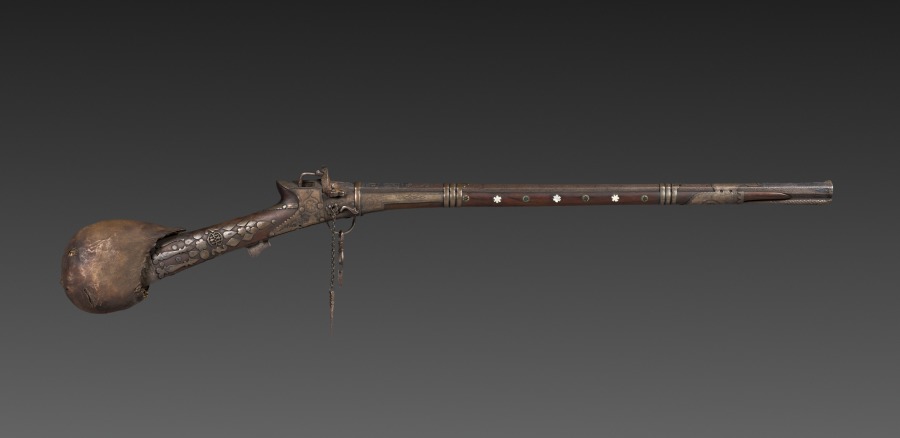
Matchlock Musket (c. 1750) is in the Cleveland Museum of Art collection.
The work and its context
The museum's open-access catalogue describes the work:
Collectively, the Safavid, Mughal, and Ottoman empires are known as the Gunpowder Empires. Particularly from the 1500–1700s, they were among the strongest economic, cultural, and militaristic powers. Each trained and equipped their armies with the latest gunpowder firearms, particularly cannons and muskets. While used in battle, muskets were also used for leisure activities, particularly hunting. The decoration on this musket suggests it was a courtly item, fitted with a leather pad to protect the shooter from the force of the explosion after firing.
Object facts
- Title: Matchlock Musket
- Date: c. 1750
- Culture: Turkey, Ottoman period (1299–1922)
- Type: Arms and Armor
- Technique: Wood, steel, brass, mother-of-pearl inlay, and leather
- Dimensions: Overall: 103.5 cm (40 3/4 in.); Barrel: 68.3 cm (26 7/8 in.)
- Collection: Islamic Art
- Department: Islamic Art
- Accession number: 1916.828
A detail from the museum
A matchlock musket was loaded from the muzzle end with a scouring stick kept in a sleeve on the underside of the barrel.
Collection credit
Gift of J. H. Wade
Further reading listed by the museum
- Strong, Meghan E. “Art of the Islamic World.” Cleveland Art: Cleveland Museum of Art Members Magazine 61, no. 3 (Summer 2021): 28-30.
View the collection record
See the museum's photographs and full catalogue entry. Catalogue text is reproduced from the Cleveland Museum of Art's open-access data, with HTML formatting removed. This object and its supplied image are designated CC0.
Sources
More in Lifestyle
Keep reading


