Mercury (Budha), from a Mandi Astrology Series (c. 1810): Art, History and Details
Mercury (Budha), from a Mandi Astrology Series at the Cleveland Museum of Art: c. 1810, Gum tempera and gold on paper. Explore the work's context, creator attribution and collection history.
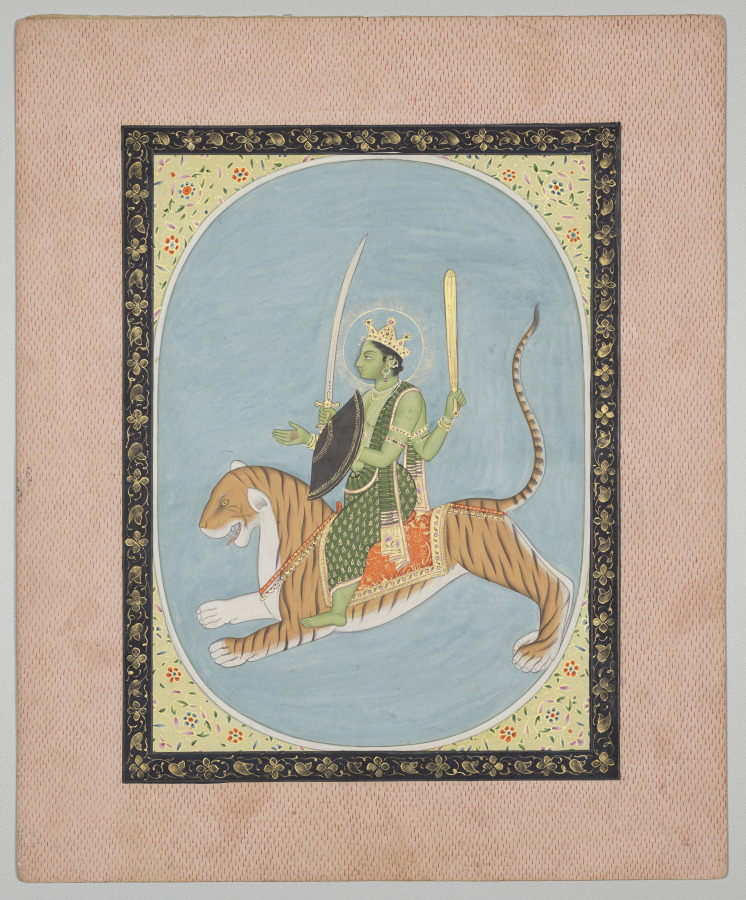
Mercury (Budha), from a Mandi Astrology Series (c. 1810) is in the Cleveland Museum of Art collection. The museum's creator attribution is Sanju (Indian, active late 1700s–early 1800s).
The work and its context
The museum's open-access catalogue describes the work:
This page is from a series of paintings featuring astrological subjects, including personifications of planets and signs of the zodiac. Historically in India, the auspicious conjunction of planets with certain calendar dates was important for determining when to schedule events or ceremonies. Mercury is depicted as a warrior riding a tiger through the sky.
Object facts
- Title: Mercury (Budha), from a Mandi Astrology Series
- Date: c. 1810
- Creator attribution: Sanju (Indian, active late 1700s–early 1800s)
- Culture: Northern India, Pahari kingdoms
- Type: Painting
- Technique: Gum tempera and gold on paper
- Dimensions: 27 x 22.1 cm (10 5/8 x 8 11/16 in.)
- Collection: Indian Art
- Department: Indian and Southeast Asian Art
- Accession number: 2020.433
A detail from the museum
A green body is the most decisive characteristic used to identify Mercury.
Collection credit
Gift of Nancy and Wayne Hunnicutt
Further reading listed by the museum
- Sotheby's, New York. Indian & Southeast Asian Art: Including Modern Indian Paintings from the Wilberding Collection. 20 September 2005.
View the collection record
See the museum's photographs and full catalogue entry. Catalogue text is reproduced from the Cleveland Museum of Art's open-access data, with HTML formatting removed. This object and its supplied image are designated CC0.
Sources
More in Lifestyle
Keep reading