Mirror (794–1185): Art, History and Details
Mirror at the Cleveland Museum of Art: 794–1185, bronze. Explore the work's context, creator attribution and collection history.
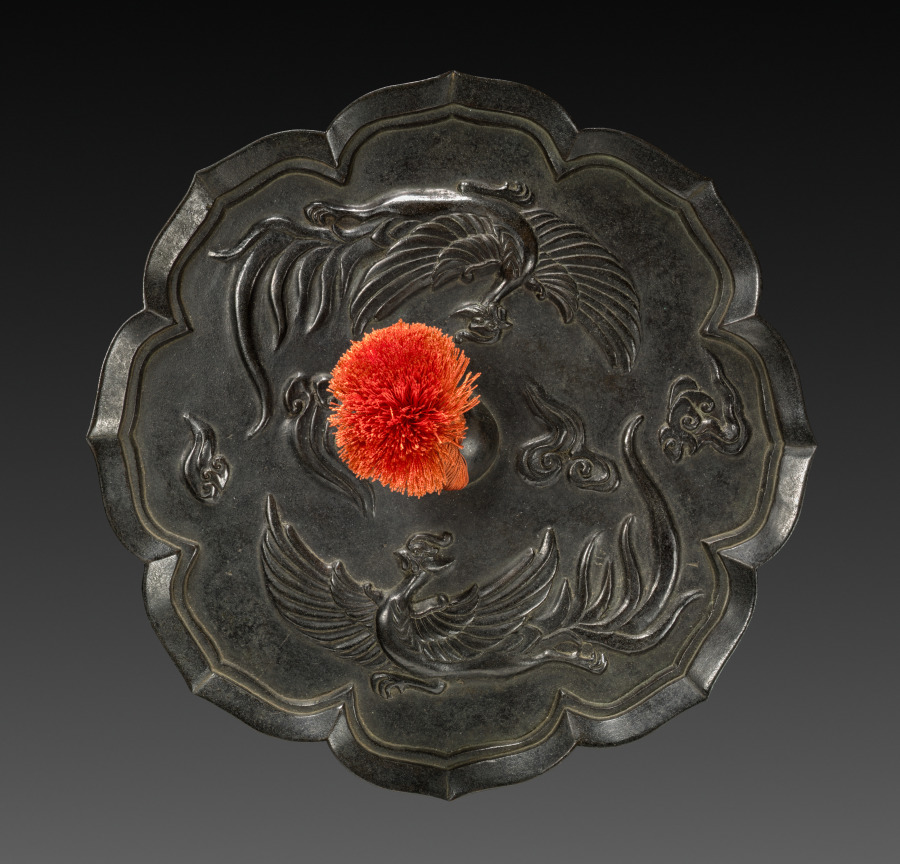
Mirror (794–1185) is in the Cleveland Museum of Art collection.
The work and its context
The museum's open-access catalogue describes the work:
The polished side of this eight-pointed mirror has an incised design of the kami Takemikazuchi riding on a deer from Kashima to Mount Mikasa, where he takes up residence. Although the mirror itself could have been produced as early as the 1300s, the incised line work has a fresh quality more consistent with later works, and the image may have been executed as late as the 1600s–1800s. Unlike most painted images of the episode, this incised one includes neither the sakaki tree branch supporting the Buddhist manifestations of the five Kasuga kami, nor Takemikazuchi’s companions. The back of the mirror has a design of two phoenixes.
Object facts
- Title: Mirror
- Date: 794–1185
- Culture: Japan, Heian period (794–1185)
- Type: Metalwork
- Technique: bronze
- Dimensions: Diameter: 21 cm (8 1/4 in.)
- Collection: Japanese Art
- Department: Japanese Art
- Accession number: 1917.681
Collection credit
Gift of D. Z. Norton
Further reading listed by the museum
- "Accessions." The Bulletin of the Cleveland Museum of Art 4, no. 4 (1917): 64-67.
- The Cleveland Museum of Art. Handbook of the Cleveland Museum of Art. Cleveland, OH: The Cleveland Museum of Art, 1925.
- The Cleveland Museum of Art. Handbook of the Cleveland Museum of Art. Cleveland, OH: The Cleveland Museum of Art, 1928.
View the collection record
See the museum's photographs and full catalogue entry. Catalogue text is reproduced from the Cleveland Museum of Art's open-access data, with HTML formatting removed. This object and its supplied image are designated CC0.
Sources
More in Lifestyle
Keep reading