Mother and Child (c. 1860–65): Art, History and Details
Mother and Child at the Cleveland Museum of Art: c. 1860–65, daguerreotype, applied color, sixth-plate. Explore the work's context, creator attribution and collection history.
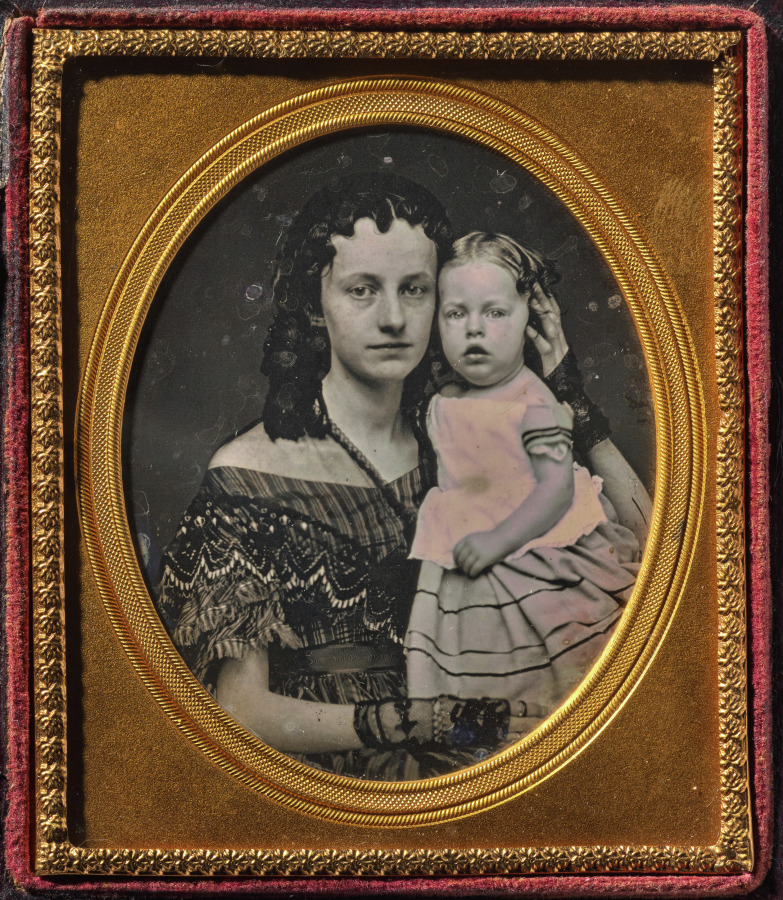
Mother and Child (c. 1860–65) is in the Cleveland Museum of Art collection.
The work and its context
The museum's open-access catalogue describes the work:
Some of the most inventive and technically skilled practitioners in the early history of photography are as yet unidentified. However, with time more of these individuals will probably be recognized by name. Introduced into America soon after its invention in 1839 by the Frenchman Louis-Jacques-Mandé Daguerre, the daguerreotype flourished from 1840 to the mid-1860s. This beautiful daguerreotype in its original case is an outstanding example of a very popular subject: mother and child. The polished silver plate precisely renders in warm tones the likeness of the elaborately dressed sitters. The mother gently steadied the child's head so that it would not move during the long exposure required by the daguerreotype process. Clearly, the maker's knowledge of chemistry and traditional principles of design were necessary for this charming portrait.
Object facts
- Title: Mother and Child
- Date: c. 1860–65
- Culture: America
- Type: Photograph
- Technique: daguerreotype, applied color, sixth-plate
- Dimensions: Image: 8.3 x 7 cm (3 1/4 x 2 3/4 in.); Case: 9.2 x 8.1 x 1.6 cm (3 5/8 x 3 3/16 x 5/8 in.); Matted: 61 x 50.8 cm (24 x 20 in.)
- Collection: PH - American 19th Century
- Department: Photography
- Accession number: 2002.31
Collection credit
John L. Severance Fund
View the collection record
See the museum's photographs and full catalogue entry. Catalogue text is reproduced from the Cleveland Museum of Art's open-access data, with HTML formatting removed. This object and its supplied image are designated CC0.
Sources
More in Lifestyle
Keep reading