Needle Case (Etui à Aiguilles) (1768–69): Art, History and Details
Needle Case (Etui à Aiguilles) at the Cleveland Museum of Art: 1768–69, painted wood, gold mounts. Explore the work's context, creator attribution and collection history.
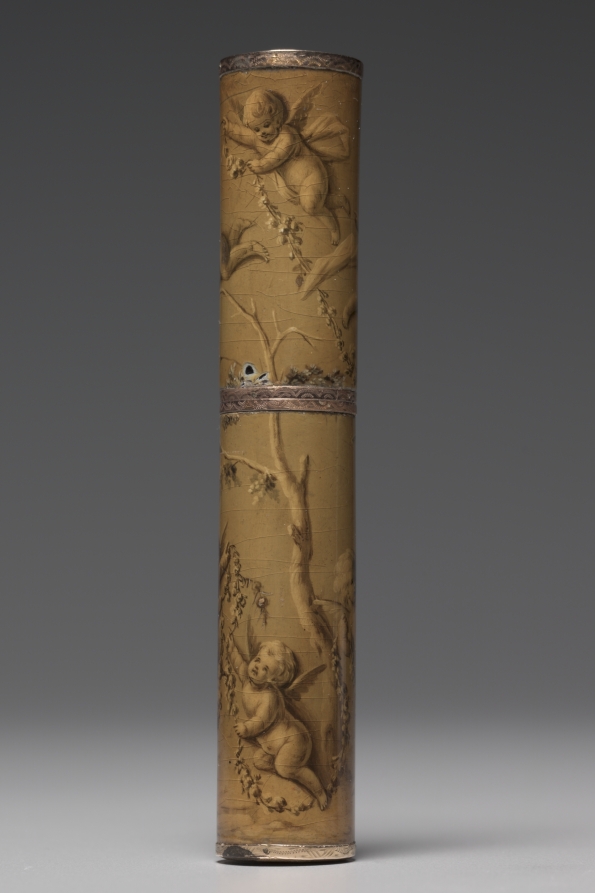
Needle Case (Etui à Aiguilles) (1768–69) is in the Cleveland Museum of Art collection.
The work and its context
The museum's open-access catalogue describes the work:
The material of cases like these delineated the status of the holder. More expensive materials such as ivory, tortoiseshell, or silver were reserved for wealthier users while more common cases were made of lacquered papier-mâché or wood. This wooden case is decorated with vernis martin, a domestic varnish imitating East Asian true lacquer. The sinuous lines, floral garlands, and putti, personifications of love in the form of winged infants, exemplify typical rococo imagery.
Object facts
- Title: Needle Case (Etui à Aiguilles)
- Date: 1768–69
- Culture: France, Paris
- Type: Miscellaneous
- Technique: painted wood, gold mounts
- Dimensions: Overall: 12.5 x 3.1 cm (4 15/16 x 1 1/4 in.)
- Collection: Decorative Arts
- Department: Decorative Art and Design
- Accession number: 1916.325
A detail from the museum
In the 1500s these cases were commonly fabricated to hold pins and needles for master tailors, but became more widely produced for women during the 1700s.
Collection credit
Gift of J. H. Wade
View the collection record
See the museum's photographs and full catalogue entry. Catalogue text is reproduced from the Cleveland Museum of Art's open-access data, with HTML formatting removed. This object and its supplied image are designated CC0.
Sources
More in Lifestyle
Keep reading