Nemesis (c. 1501–02): Art, History and Details
Nemesis at the Cleveland Museum of Art: c. 1501–02, engraving. Explore the work's context, creator attribution and collection history.
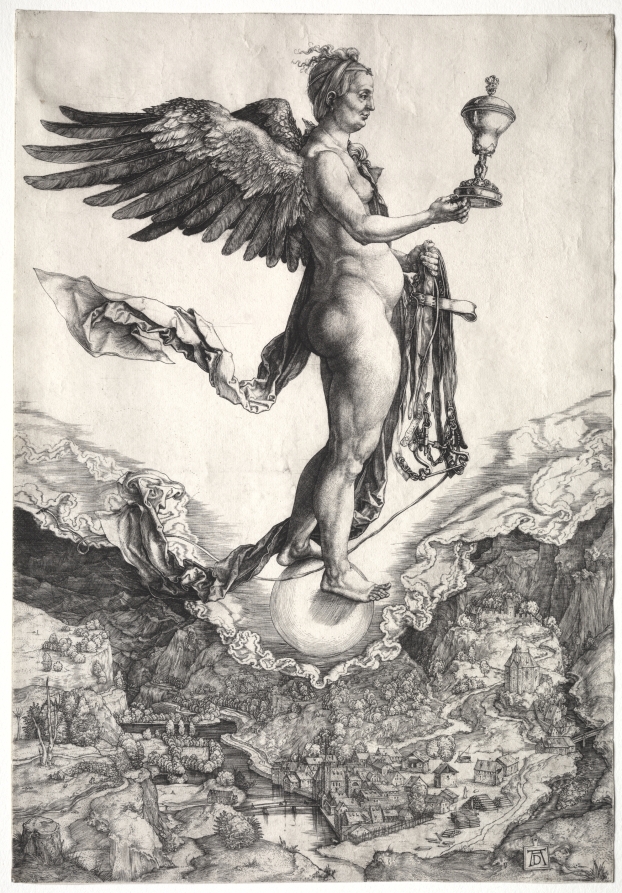
Nemesis (c. 1501–02) is in the Cleveland Museum of Art collection. The museum's creator attribution is Albrecht Dürer (German, 1471–1528).
The work and its context
The museum's open-access catalogue describes the work:
Martin Schongauer’s painterly sense of light and composition influenced Albrecht Dürer. The younger Dürer even visited Schongauer but arrived after his death. Nemesis, based on a Latin poem by Italian scholar Angelo Poliziano (1454–1494), is the Greek goddess of moral judgment and justice; her goblet and bridle symbolize reward and punishment. The print showcases Dürer’s organized, graphic approach to engraving, with refined dark-to-light transitions that create an unprecedented three-dimensional effect. His varied marks—from long and winding to crossed and dotted—produce organized and finely detailed vignettes. Such large, elaborate engravings took Dürer months to complete and attracted a growing number of collectors.
Object facts
- Title: Nemesis
- Date: c. 1501–02
- Creator attribution: Albrecht Dürer (German, 1471–1528)
- Culture: Germany, early 16th Century
- Type: Print
- Technique: engraving
- Dimensions: Sheet: 33.3 x 23 cm (13 1/8 x 9 1/16 in.)
- Collection: PR - Engraving
- Department: Prints
- Accession number: 1943.178
Collection credit
Gift of Mrs. Ralph King
Further reading listed by the museum
- Petcu, Elizabeth J. “Dürer's Victoria: Contending with the Uncertainty of Measurement.” The Art Bulletin 107, n. 4 (December 2025): 37-66.
View the collection record
See the museum's photographs and full catalogue entry. Catalogue text is reproduced from the Cleveland Museum of Art's open-access data, with HTML formatting removed. This object and its supplied image are designated CC0.
Sources
More in Lifestyle
Keep reading