Ogival Lattice with Horizontal Design (1600–1650): Art, History and Details
Ogival Lattice with Horizontal Design at the Cleveland Museum of Art: 1600–1650, Silk and gilt-metal thread: lampas weave. Explore the work's context, creator attribution and collection history.
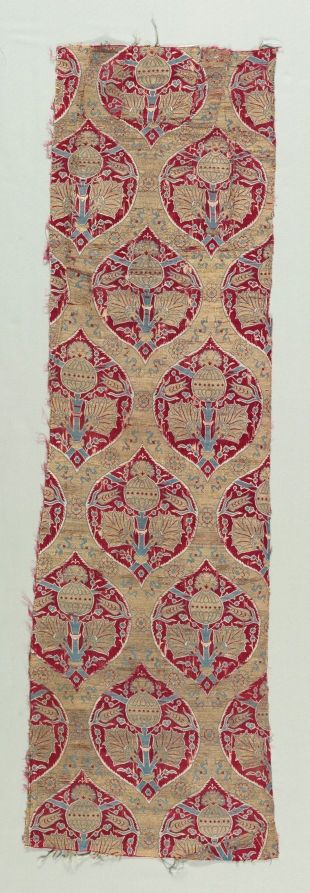
Ogival Lattice with Horizontal Design (1600–1650) is in the Cleveland Museum of Art collection.
The work and its context
The museum's open-access catalogue describes the work:
There is a pomegranate design in each ogee (pointed arch) of this silk brocade fragment. The pomegranate is a small tree originating in Persia (today’s Iran) bearing fruit of deep red flesh filled with hundreds of seeds. The pomegranate has been revered as a symbol for health and fertility by many civilizations. In Islam the pomegranate is associated with paradise as described in the Qur’an.
Object facts
- Title: Ogival Lattice with Horizontal Design
- Date: 1600–1650
- Culture: Turkey, Bursa
- Type: Textile
- Technique: Silk and gilt-metal thread: lampas weave
- Dimensions: Average: 134.6 x 41.3 cm (53 x 16 1/4 in.)
- Collection: T - Islamic
- Department: Textiles
- Accession number: 1916.1679.b
Collection credit
Gift of Mr. and Mrs. J. H. Wade
View the collection record
See the museum's photographs and full catalogue entry. Catalogue text is reproduced from the Cleveland Museum of Art's open-access data, with HTML formatting removed. This object and its supplied image are designated CC0.
Sources
More in Lifestyle
Keep reading