Ornament with Carp and Lotus Design (1100s): Art, History and Details
Ornament with Carp and Lotus Design at the Cleveland Museum of Art: 1100s, gilt bronze. Explore the work's context, creator attribution and collection history.
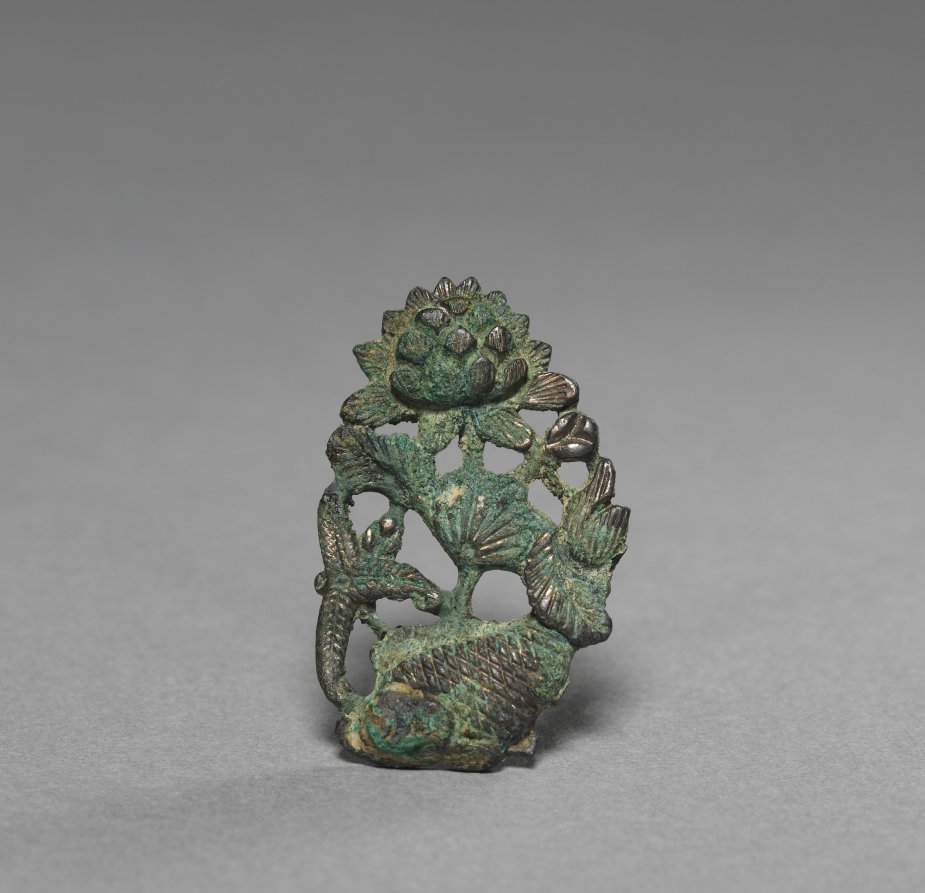
Ornament with Carp and Lotus Design (1100s) is in the Cleveland Museum of Art collection.
The work and its context
The museum's open-access catalogue describes the work:
Metalworking techniques advanced remarkably during the Goryeo period (918–1392). Sophisticated metal objects with intricate designs were used not only as daily accessories, but also as burial goods for commemorating the dead. Traces of fibers found on the backs of these metal ornaments suggest that they were once used as brooches to hold garments together.
Object facts
- Title: Ornament with Carp and Lotus Design
- Date: 1100s
- Culture: Korea, Goryeo dynasty (918–1392)
- Type: Metalwork
- Technique: gilt bronze
- Dimensions: Overall: 3.2 x 2 cm (1 1/4 x 13/16 in.)
- Collection: Korean Art
- Department: Korean Art
- Accession number: 1917.1040
A detail from the museum
This metal ornament is part of a decorative brooch once used to hold clothes together.
Collection credit
Gift of the John Huntington Art and Polytechnic Trust
Further reading listed by the museum
- Goryeo Dynasty: Korea's Age of Enlightenment, 918-1392. San Francisco: Asian Art Museum, 2003.
- Choi, Eung-chon. “Metal Arts in the Late Goryeo Period [고려후기의 금속공예].” Kangjwa misulsa (2004): 125-156.
- Choi, Eung-chon. “Craftsmen in Metal Arts in the Goryeo Dynasty [고려시대 金屬工藝의 匠人].” Misulsahak yeongu (2004): 171-192.
View the collection record
See the museum's photographs and full catalogue entry. Catalogue text is reproduced from the Cleveland Museum of Art's open-access data, with HTML formatting removed. This object and its supplied image are designated CC0.
Sources
More in Lifestyle
Keep reading