Watchcase (Boîtier de montre) (c. 1640): Art, History and Details
Watchcase (Boîtier de montre) at the Cleveland Museum of Art: c. 1640, gold and enamel. Explore the work's context, creator attribution and collection history.
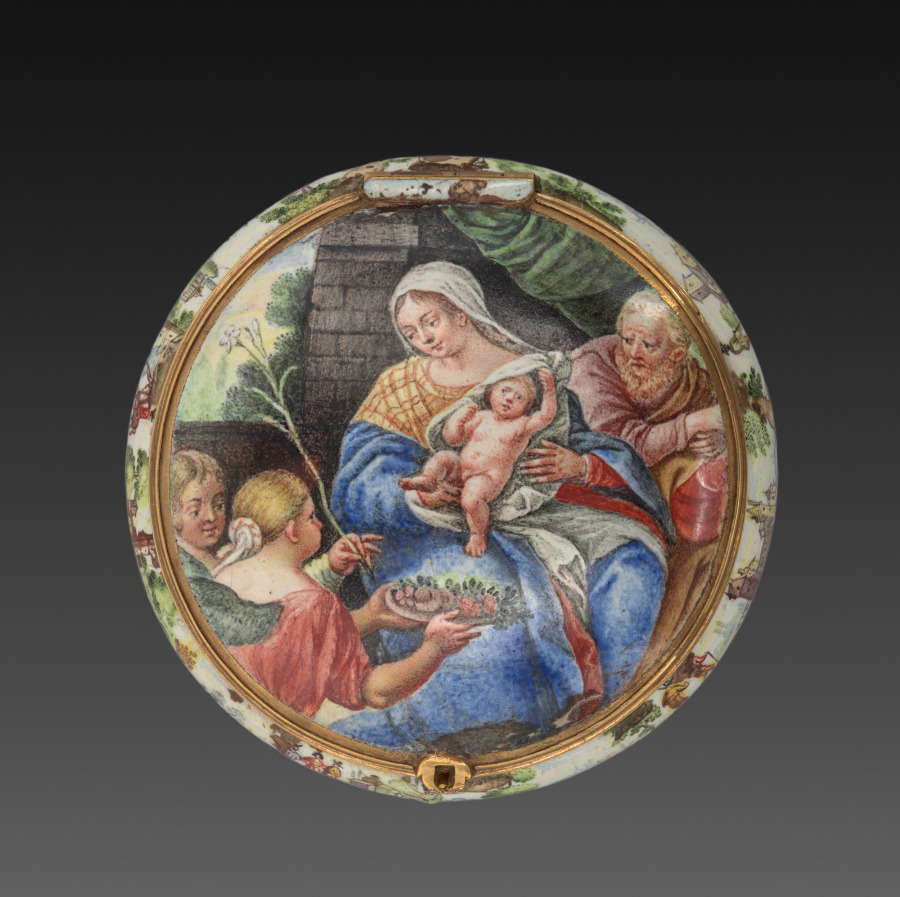
Watchcase (Boîtier de montre) (c. 1640) is in the Cleveland Museum of Art collection.
The work and its context
The museum's open-access catalogue describes the work:
In the 1630s, the practice of painting with enamel on metal became a means for French miniature painters to achieve a more richly colored, durable product. Previously miniatures were painted with watercolor on vellum, a material made from animal skin. This case would have originally held a watch, but was later transformed into a simple box through the removal of the watch mechanism and ring. This watch case is richly painted inside and out with miniatures modeled after well-known religiously allegorical works.
Object facts
- Title: Watchcase (Boîtier de montre)
- Date: c. 1640
- Culture: France
- Type: Jewelry
- Technique: gold and enamel
- Dimensions: Diameter: 5.8 cm (2 5/16 in.)
- Collection: Decorative Arts
- Department: Decorative Art and Design
- Accession number: 1916.348
A detail from the museum
Inspiration for the box’s miniatures was drawn from works by Peter Paul Rubens’ The Holy Family with Saints John the Baptist and Elizabeth (1615) (back panel) and Nicolas Cochin (interior base).
Collection credit
Gift of Mr. and Mrs. J. H. Wade
View the collection record
See the museum's photographs and full catalogue entry. Catalogue text is reproduced from the Cleveland Museum of Art's open-access data, with HTML formatting removed. This object and its supplied image are designated CC0.
Sources
More in Lifestyle
Keep reading