Ornamental Shoulder Band from a Tunic (600–650): Art, History and Details
Ornamental Shoulder Band from a Tunic at the Cleveland Museum of Art: 600–650, tapestry weave with supplementary weft wrapping; undyed linen and dyed wool. Explore the work's context, creator attribution and collection history.
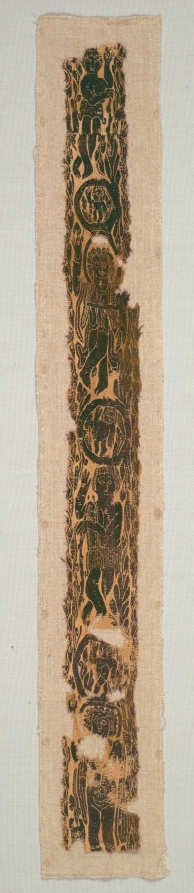
Ornamental Shoulder Band from a Tunic (600–650) is in the Cleveland Museum of Art collection.
The work and its context
The museum's open-access catalogue describes the work:
On this tunic decoration, human figures appear to dance amid leafy plants. The first and third figures are shepherds, each wearing spotted animal–skin garments and holding wooden staffs. The second and fourth figures are dancers; the upper one wears a short draped garment (peplos), and the lower one appears nude except for a scarf draped over her shoulders. The brown-purple wool was dyed with kermes, a bluish-red dye from dried insects, and indigo in an unsuccessful attempt to imitate purple.
Object facts
- Title: Ornamental Shoulder Band from a Tunic
- Date: 600–650
- Culture: Egypt, Byzantine period
- Type: Textile
- Technique: tapestry weave with supplementary weft wrapping; undyed linen and dyed wool
- Dimensions: Overall: 60.3 x 5.7 cm (23 3/4 x 2 1/4 in.); Mounted: 67.3 x 16.5 cm (26 1/2 x 6 1/2 in.)
- Collection: T - Coptic
- Department: Textiles
- Accession number: 1919.24
Collection credit
Dudley P. Allen Fund
Further reading listed by the museum
- "Accessions." The Bulletin of the Cleveland Museum of Art 6, no. 2 (1919): 37-38.
View the collection record
See the museum's photographs and full catalogue entry. Catalogue text is reproduced from the Cleveland Museum of Art's open-access data, with HTML formatting removed. This object and its supplied image are designated CC0.
Sources
More in Lifestyle
Keep reading