Pair of Hexagonal Jars (late 1600s): Art, History and Details
Pair of Hexagonal Jars at the Cleveland Museum of Art: late 1600s, porcelain with overglaze color enamel and gold decoration (Hizen ware; Kakiemon type). Explore the work's context, creator attribution and collection history.
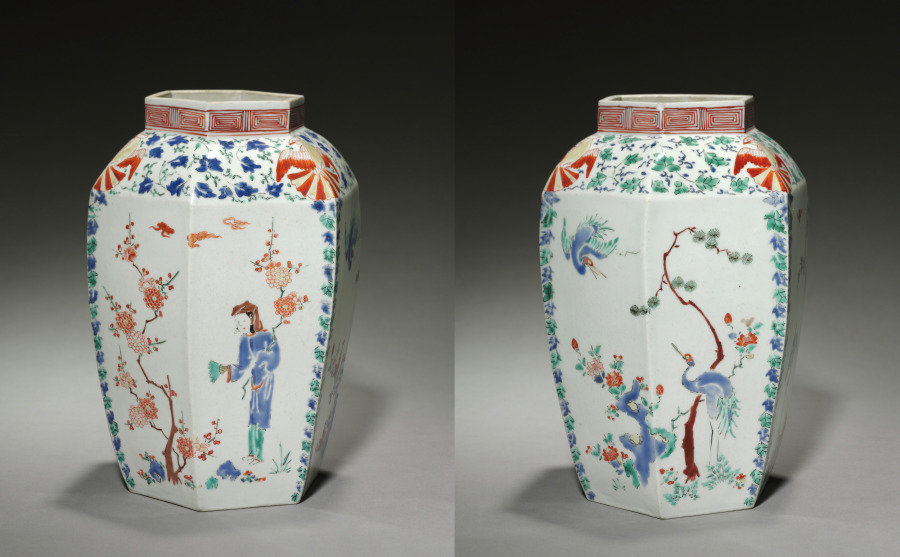
Pair of Hexagonal Jars (late 1600s) is in the Cleveland Museum of Art collection.
The work and its context
The museum's open-access catalogue describes the work:
This kakiemon-type jar with plum design is a product made for the European markets. Here, Japanese kakiemon potters transformed the typical plum, bamboo, and pine motifs into a theme appreciating the plum. The 9th-century Japanese scholar and politician Sugawara Michizane established the plum as a symbol of scholarship. An excellent poet, particularly of Chinese-style poetry, he was also well known for his love of plum blossoms. Later, the plum came to represent tenmangu, a shrine for Sugawara.
Object facts
- Title: Pair of Hexagonal Jars
- Date: late 1600s
- Culture: Japan, Edo period (1615–1868)
- Type: Ceramic
- Technique: porcelain with overglaze color enamel and gold decoration (Hizen ware; Kakiemon type)
- Dimensions: Overall: 26.8 x 18.6 cm (10 9/16 x 7 5/16 in.)
- Collection: Japanese Art
- Department: Japanese Art
- Accession number: 1964.273
Collection credit
Severance and Greta Millikin Collection
Further reading listed by the museum
- Cleveland Museum of Art, and Sŏn Sŭng-hye. The Lure of Painted Poetry: Japanese and Korean Art. Cleveland: Cleveland Museum of Art, 2011.
View the collection record
See the museum's photographs and full catalogue entry. Catalogue text is reproduced from the Cleveland Museum of Art's open-access data, with HTML formatting removed. This object and its supplied image are designated CC0.
Sources
More in Lifestyle
Keep reading