Partisan (1729–32): Art, History and Details
Partisan at the Cleveland Museum of Art: 1729–32, steel, etched, haft broken. Explore the work's context, creator attribution and collection history.
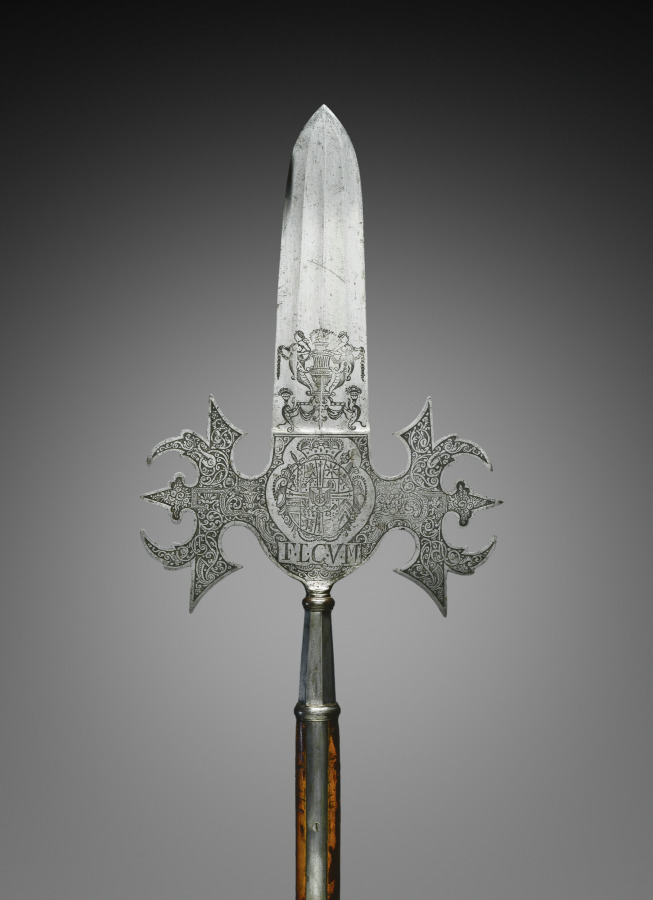
Partisan (1729–32) is in the Cleveland Museum of Art collection.
The work and its context
The museum's open-access catalogue describes the work:
The partisan, a staff weapon with a symmetrical head, was carried by infantry officers and members of princely bodyguards during the 1600s and 1700s. This one is inscribed with the coat of arms and letters F.L.C.V.M for Franz Ludwig Kurfurst von Mainz. Franz Ludwig (1664-1732) held the office from 1729-32.
Object facts
- Title: Partisan
- Date: 1729–32
- Culture: Germany, 18th century
- Type: Arms and Armor
- Technique: steel, etched, haft broken
- Dimensions: Overall: 29.1 cm (11 7/16 in.)
- Collection: MED - Arms & Armor
- Department: Medieval Art
- Accession number: 1951.352
A detail from the museum
Partisans were a favored weapon of palace guards and princely bodyguards; the large flat surface of the head lends itself perfectly for decorative coats of arms.
Collection credit
Gift of Mr. and Mrs. William F. Wieman
Further reading listed by the museum
- Fliegel, Stephen N. Arms and Armor: The Cleveland Museum of Art. [Cleveland, Ohio]: The Museum, 1998.
- Fliegel, Stephen N. Arms & Armor: The Cleveland Museum of Art. [Cleveland, Ohio]: Cleveland Museum of Art, 2007.
View the collection record
See the museum's photographs and full catalogue entry. Catalogue text is reproduced from the Cleveland Museum of Art's open-access data, with HTML formatting removed. This object and its supplied image are designated CC0.
Sources
More in Lifestyle
Keep reading