Patamanjari Ragini of Dipak, from a Ragamala (c. 1740–50): Art, History and Details
Patamanjari Ragini of Dipak, from a Ragamala at the Cleveland Museum of Art: c. 1740–50, Gum tempera and ink on paper. Explore the work's context, creator attribution and collection history.
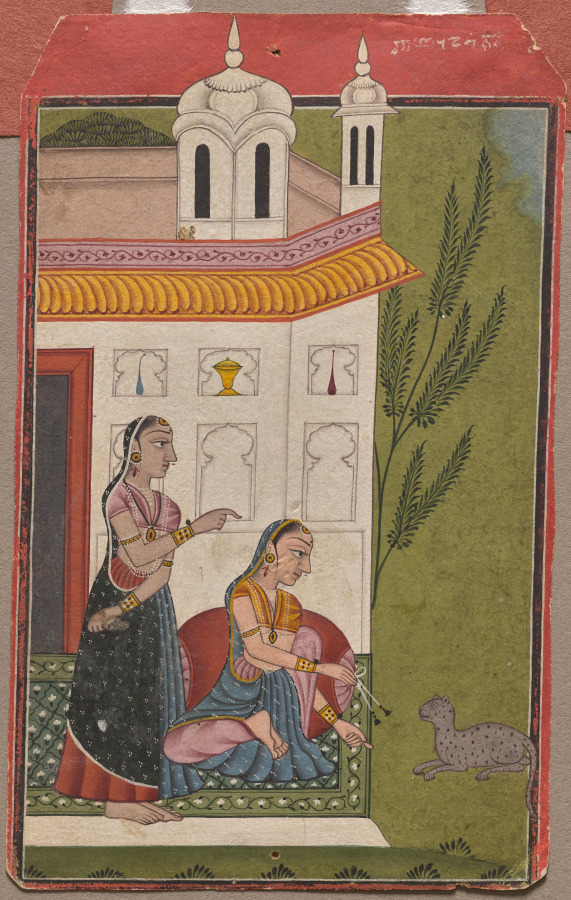
Patamanjari Ragini of Dipak, from a Ragamala (c. 1740–50) is in the Cleveland Museum of Art collection.
The work and its context
The museum's open-access catalogue describes the work:
According to a poem describing this ragini (melody), a lovesick girl plays with a cat to pass the time. Her companion tries to console her. Musical performances of Patamanjari Ragini are based on the sound of a cat’s voice. They evoke the heroine’s feelings of longing to reunite with her lover. This painting was part of an extensive set, each depicting a specific mood and a visual element related to the sound of different melodies.
Object facts
- Title: Patamanjari Ragini of Dipak, from a Ragamala
- Date: c. 1740–50
- Culture: Northern India, Pahari kingdoms
- Type: Painting
- Technique: Gum tempera and ink on paper
- Dimensions: Overall: 18.9 x 11.4 cm (7 7/16 x 4 1/2 in.)
- Collection: Indian Art
- Department: Indian and Southeast Asian Art
- Accession number: 1990.39
A detail from the museum
A young girl and her companion play with a spotted gray cat to pass the time.
Collection credit
Gift of John D. Proctor
View the collection record
See the museum's photographs and full catalogue entry. Catalogue text is reproduced from the Cleveland Museum of Art's open-access data, with HTML formatting removed. This object and its supplied image are designated CC0.
Sources
More in Lifestyle
Keep reading