Peasant Woman (1740–1750): Art, History and Details
Peasant Woman at the Cleveland Museum of Art: 1740–1750, porcelain with enamel decoration. Explore the work's context, creator attribution and collection history.
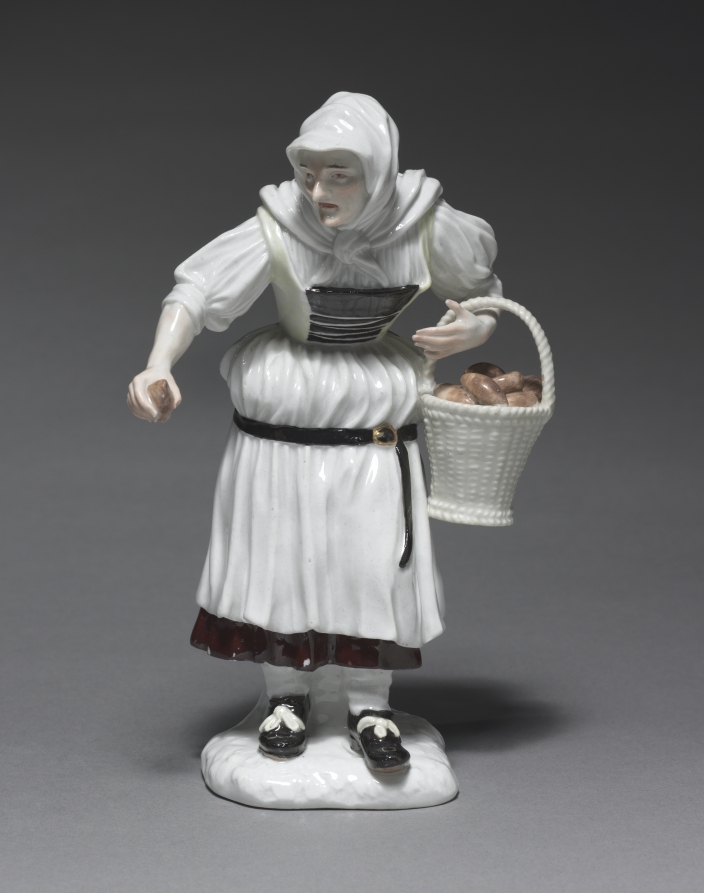
Peasant Woman (1740–1750) is in the Cleveland Museum of Art collection. The museum's creator attribution is Meissen Porcelain Factory (German, est. c. 1710); Johann Joachim Kändler (German, 1706–1768); Peter Reinicke (German, 1715–1768).
The work and its context
The museum's open-access catalogue describes the work:
The official Saxon porcelain factory at Meissen not only introduced the manufacture of true, hard-paste porcelain to Europe but also popularized the creation of small porcelain sculptures to be used primarily as dining table decorations. Realistic subjects based on contemporary life were introduced in the 1740s. J. J. Kaendler was the most famous of several modelers who worked at the Meissen factory.
Object facts
- Title: Peasant Woman
- Date: 1740–1750
- Creator attribution: Meissen Porcelain Factory (German, est. c. 1710); Johann Joachim Kändler (German, 1706–1768); Peter Reinicke (German, 1715–1768)
- Culture: Germany, 18th century
- Type: Ceramic
- Technique: porcelain with enamel decoration
- Dimensions: Overall: 17.2 x 10.1 x 6.8 cm (6 3/4 x 4 x 2 11/16 in.)
- Collection: Decorative Arts
- Department: Decorative Art and Design
- Accession number: 2001.93
Collection credit
John L. Severance Fund
View the collection record
See the museum's photographs and full catalogue entry. Catalogue text is reproduced from the Cleveland Museum of Art's open-access data, with HTML formatting removed. This object and its supplied image are designated CC0.
Sources
More in Lifestyle
Keep reading