Pendant in the Shape of a Fish-Tailed Elephant (185–72 BCE): Art, History and Details
Pendant in the Shape of a Fish-Tailed Elephant at the Cleveland Museum of Art: 185–72 BCE, gold. Explore the work's context, creator attribution and collection history.
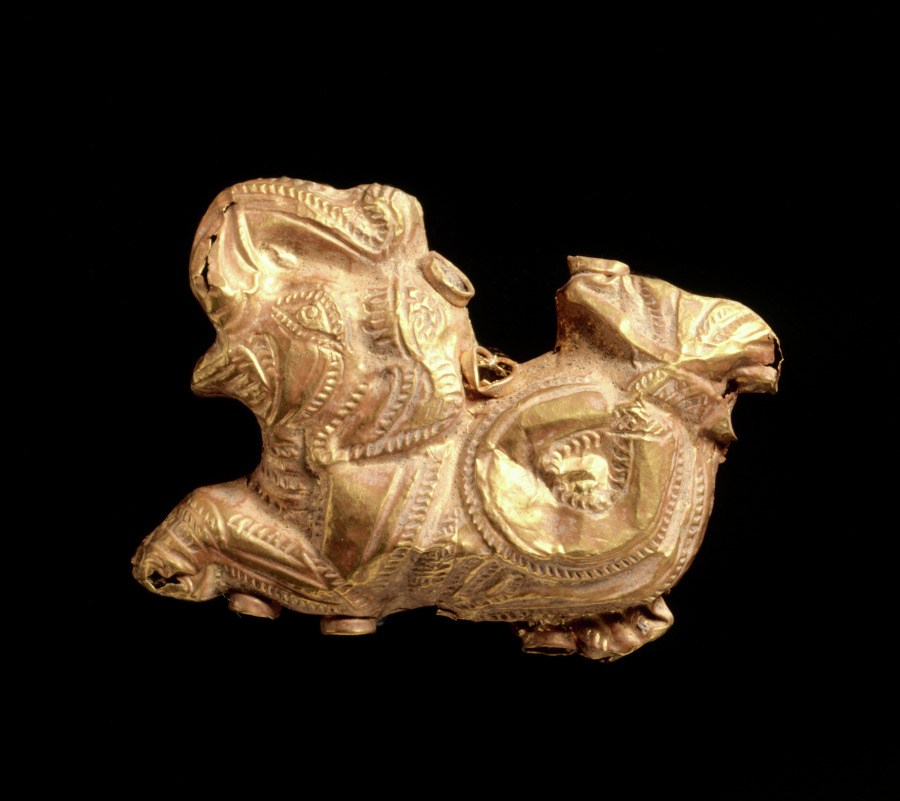
Pendant in the Shape of a Fish-Tailed Elephant (185–72 BCE) is in the Cleveland Museum of Art collection.
The work and its context
The museum's open-access catalogue describes the work:
Because of water's life-giving properties, animals such as fish and Indian elephants who love the water were considered auspicious. This composite elephant with a playfully raised trunk and a curling fish tail would have been strung as a pendant on a necklace.
Object facts
- Title: Pendant in the Shape of a Fish-Tailed Elephant
- Date: 185–72 BCE
- Culture: India, Shunga period (185–78 BCE)
- Type: Jewelry
- Technique: gold
- Collection: Indian Art - Sunga
- Department: Indian and Southeast Asian Art
- Accession number: 1973.63
Collection credit
John L. Severance Fund
Further reading listed by the museum
- "The Year in Review for 1973." The Bulletin of the Cleveland Museum of Art 61, no. 2 (1974): 31-78.
- Sengupta, Arputha Rani. Buddhist Jewels in Mortuary Cult: Magic Symbols. Delhi: Agam Kala Prakashan, 2019.
View the collection record
See the museum's photographs and full catalogue entry. Catalogue text is reproduced from the Cleveland Museum of Art's open-access data, with HTML formatting removed. This object and its supplied image are designated CC0.
Sources
More in Lifestyle
Keep reading