Perfume Case (Etui flaconnier) (c. 1780): Art, History and Details
Perfume Case (Etui flaconnier) at the Cleveland Museum of Art: c. 1780, painted wood with gilt metal mounts, tortoiseshell. Explore the work's context, creator attribution and collection history.
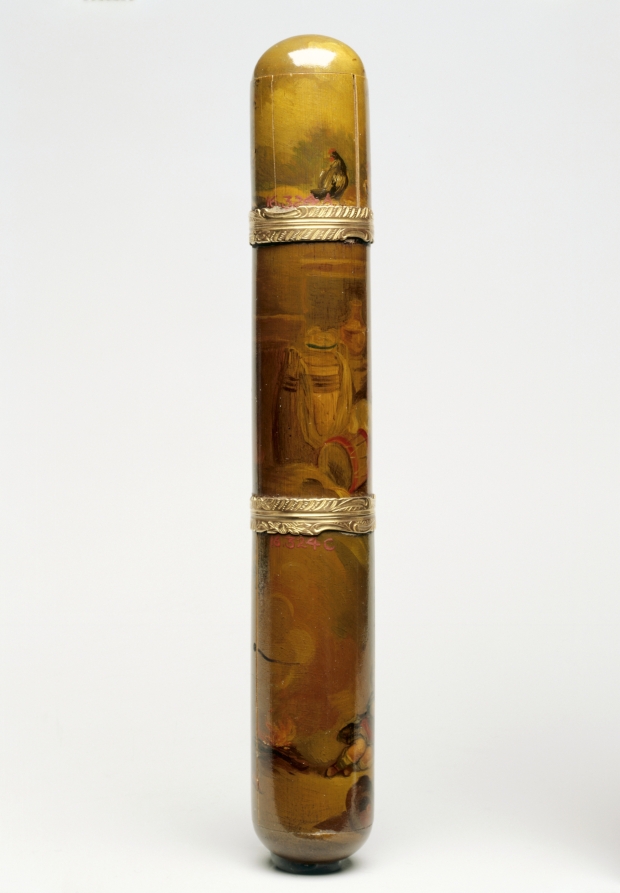
Perfume Case (Etui flaconnier) (c. 1780) is in the Cleveland Museum of Art collection.
The work and its context
The museum's open-access catalogue describes the work:
Resting inside this case is a small octagonal crystal flask that would have held perfume. The painted miniatures are decorated with vernis martin, a popular varnish that imitated East Asian true lacquer. These scenes of rural merriment were often miniature reproductions of well-respected artists of the period. The depiction of three children and a dog on the lower portion of the case was drawn from Jean-Honoré Fragonard’s The Happy Family (L’heureuse fécondité) (1777).
Object facts
- Title: Perfume Case (Etui flaconnier)
- Date: c. 1780
- Culture: France
- Type: Cosmetic Objects
- Technique: painted wood with gilt metal mounts, tortoiseshell
- Dimensions: Overall: 12.6 x 2.6 cm (4 15/16 x 1 in.)
- Collection: Decorative Arts
- Department: Decorative Art and Design
- Accession number: 1916.324
A detail from the museum
Perfume was an important part of the French toilette, a lengthy ritual of washing and dressing practiced by members of the French social elite.
Collection credit
Gift of Mr. and Mrs. J. H. Wade
View the collection record
See the museum's photographs and full catalogue entry. Catalogue text is reproduced from the Cleveland Museum of Art's open-access data, with HTML formatting removed. This object and its supplied image are designated CC0.
Sources
More in Lifestyle
Keep reading