Phänomen Vase (c. 1898–1903): Art, History and Details
Phänomen Vase at the Cleveland Museum of Art: c. 1898–1903, glass. Explore the work's context, creator attribution and collection history.
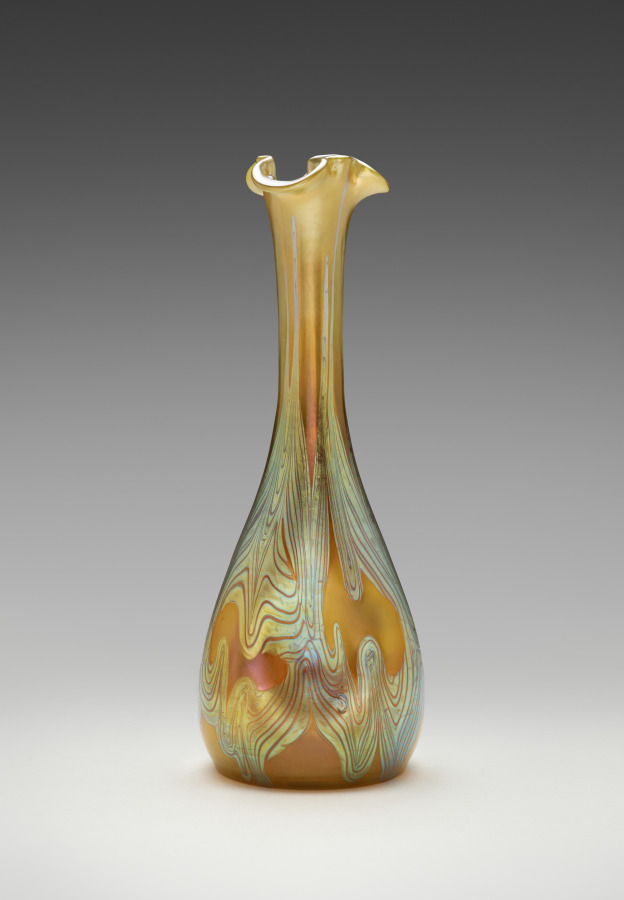
Phänomen Vase (c. 1898–1903) is in the Cleveland Museum of Art collection. The museum's creator attribution is Johann Lötz Witwe, Klostermühle (German).
The work and its context
The museum's open-access catalogue describes the work:
Johann Lötz Witwe was a renowned Bohemian glass manufacturer whose works are outstanding examples of Art Nouveau glass. In the 1890s, it produced cheaper versions of Tiffany’s colored glasses with metallic iridescence. Eventually, the Bohemian factory developed its own aesthetic and technique and commissioned leading designers of the Vienna Secession movement. The Phänomen (Phenomenon) range, patented in 1898, is one of the signature products of Lötz.
Object facts
- Title: Phänomen Vase
- Date: c. 1898–1903
- Creator attribution: Johann Lötz Witwe, Klostermühle (German)
- Culture: Austria
- Type: Sculpture
- Technique: glass
- Dimensions: height: 25.4 cm (10 in.)
- Collection: Decorative Arts
- Department: Decorative Art and Design
- Accession number: 2024.102
A detail from the museum
Witwe means "widow" in German; the name of the company was given by the wife of Johann Lötz, Susanne, who ran the business after her husband’s death.
Collection credit
Gift of the family of Harold S. Meyer
View the collection record
See the museum's photographs and full catalogue entry. Catalogue text is reproduced from the Cleveland Museum of Art's open-access data, with HTML formatting removed. This object and its supplied image are designated CC0.
Sources
More in Lifestyle
Keep reading