Pilgrim’s Flask (c. 1099–1200): Art, History and Details
Pilgrim’s Flask at the Cleveland Museum of Art: c. 1099–1200, lead. Explore the work's context, creator attribution and collection history.
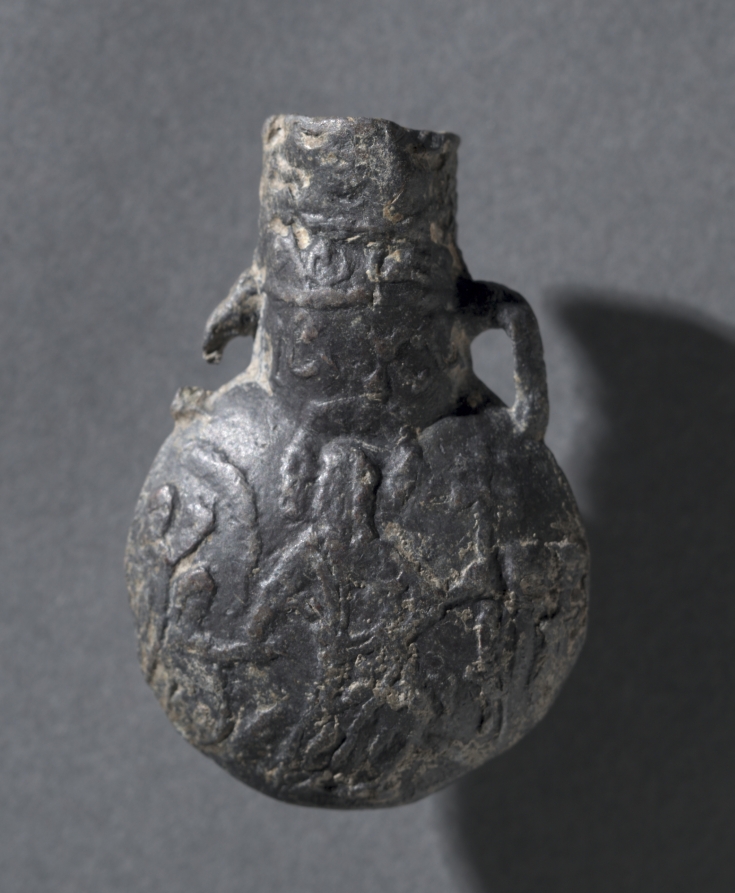
Pilgrim’s Flask (c. 1099–1200) is in the Cleveland Museum of Art collection.
The work and its context
The museum's open-access catalogue describes the work:
After the Crusader conquest of the Holy Land in 1099, Jerusalem experienced a revival of Christian pilgrimage. During the 12th century, the Church of the Holy Sepulcher was rebuilt, redecorated, and reconsecrated. With the influx of new pilgrims, especially from Western Europe, lead ampullae (small flasks) such as this very rare example were briefly reintroduced. The flask was cast with images of the Church of the Holy Sepulcher and Christ’s Descent into Limbo (Anastasis), establishing a visual connection with the holy sites of Christ’s death and entombment.
Object facts
- Title: Pilgrim’s Flask
- Date: c. 1099–1200
- Culture: Byzantium, Latin Kingdom of Jerusalem, Palestine, Byzantine, Crusader Period, late 11th-12th Century
- Type: Metalwork
- Technique: lead
- Dimensions: Overall: 4.3 x 2.9 cm (1 11/16 x 1 1/8 in.)
- Collection: MED - Byzantine
- Department: Medieval Art
- Accession number: 1999.234
Collection credit
Gift of Bruce Ferrini in memory of Robert P. Bergman
Further reading listed by the museum
- Pitarakis, Brigitte. “Lead Flasks and Pilgrimages After the Crusades*.” In Memory of Prof. Dr. Işın Demirkent, edited by Ayri Basim, pp. 395–415. Istanbul: İstanbul Üniversitesi Edebiyat Fakültesi, 2008.
- Cleveland Museum of Art, “Cleveland Museum of Art Acquires Rare Chinese Paintings, Baroque Porcelain Plaque and Other New Acquisitions Exhibited with Hanging Scrolls,” December 20, 1999, Cleveland Museum of Art Archives.
- Boehm, Barbara Drake and Melanie Holbomb, eds. Jerusalem, 1000-1400: Every People Under Heaven. NY: The Metropolitan Museum of Art, 2016.
View the collection record
See the museum's photographs and full catalogue entry. Catalogue text is reproduced from the Cleveland Museum of Art's open-access data, with HTML formatting removed. This object and its supplied image are designated CC0.
Sources
More in Lifestyle
Keep reading