Plaque: Seated Prophet from a Reliquary Shrine (c. 1170–80): Art, History and Details
Plaque: Seated Prophet from a Reliquary Shrine at the Cleveland Museum of Art: c. 1170–80, gilded copper, champlevé enamel. Explore the work's context, creator attribution and collection history.
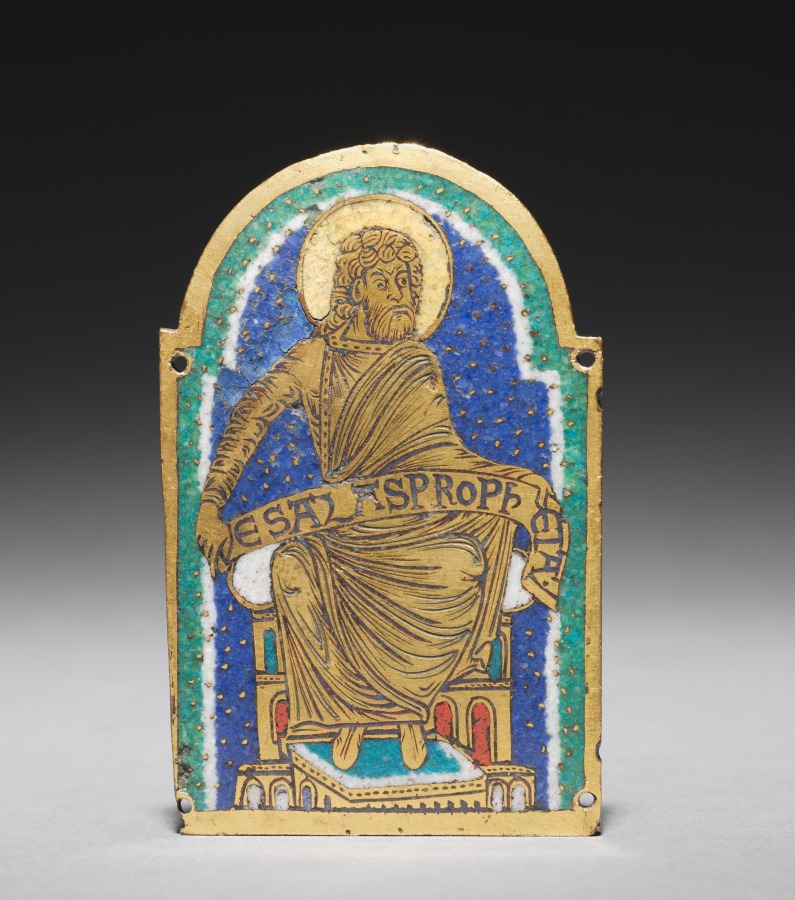
Plaque: Seated Prophet from a Reliquary Shrine (c. 1170–80) is in the Cleveland Museum of Art collection.
The work and its context
The museum's open-access catalogue describes the work:
Once used as decorations for a reliquary shrine, each enamel plaque represents a biblical prophet: Isaiah, Obadiah, Elisha, and Hosea. Fine gold dots punctuate dark blue backgrounds. Typical of Hildesheim enamels, this detailing creates the illusion that the prophets sit against star-studded twilight skies.
Object facts
- Title: Plaque: Seated Prophet from a Reliquary Shrine
- Date: c. 1170–80
- Culture: Germany, Lower Saxony, Hildesheim, Romanesque period, 12th century
- Type: Enamel
- Technique: gilded copper, champlevé enamel
- Dimensions: Average: 9 x 5.7 x 0.3 cm (3 9/16 x 2 1/4 x 1/8 in.)
- Collection: MED - Romanesque
- Department: Medieval Art
- Accession number: 1950.574
Collection credit
Purchase from the J. H. Wade Fund
Further reading listed by the museum
- Milliken, William M. “Four Champlevé Enamel Plaques.” The Bulletin of the Cleveland Museum of Art 38, no. 4 (April 1951): 72–74.
- The Cleveland Museum of Art. The Cleveland Museum of Art Handbook. Cleveland, OH: The Cleveland Museum of Art, 1958.
- The Cleveland Museum of Art. Handbook of the Cleveland Museum of Art/1966. Cleveland, OH: The Cleveland Museum of Art, 1966.
View the collection record
See the museum's photographs and full catalogue entry. Catalogue text is reproduced from the Cleveland Museum of Art's open-access data, with HTML formatting removed. This object and its supplied image are designated CC0.
Sources
More in Lifestyle
Keep reading